

In the dynamic landscape of modern manufacturing, the pursuit of enhanced production efficiency stands as a cornerstone for businesses aiming to stay competitive. One machining technique that has garnered significant attention in recent years is multi - spindle machining. As a seasoned supplier of Multi - spindle Machining services, I am eager to delve into the question: Can multi - spindle machining improve production efficiency?
Understanding Multi - spindle Machining
Multi - spindle machining is a sophisticated manufacturing process that involves the use of multiple spindles working simultaneously on a workpiece. Unlike traditional single - spindle machines, which perform operations one at a time, multi - spindle machines can execute several machining tasks concurrently. This parallel processing capability is the key to unlocking its potential for improving production efficiency.
The core components of a multi - spindle machine typically include a rotating drum or turret that holds multiple spindles. Each spindle can be equipped with different cutting tools, allowing for a variety of machining operations such as drilling, turning, milling, and threading to be carried out in a single setup. This reduces the need for multiple machine setups and tool changes, which are often time - consuming and can lead to errors.
Advantages of Multi - spindle Machining in Improving Production Efficiency
1. Reduced Cycle Time
One of the most significant advantages of multi - spindle machining is the substantial reduction in cycle time. Since multiple spindles are working simultaneously, the overall time required to complete a part is significantly shorter compared to single - spindle machining. For example, if a single - spindle machine takes 10 minutes to drill four holes in a workpiece, a four - spindle machine can complete the same task in just 2.5 minutes, assuming all spindles are operating at the same speed. This reduction in cycle time directly translates into higher production rates and increased throughput.
2. Higher Productivity
Multi - spindle machines can produce more parts in a given period, leading to higher productivity. With the ability to perform multiple operations simultaneously, these machines can handle complex parts with multiple features in a single pass. This eliminates the need for multiple machining steps on different machines, which not only saves time but also reduces the risk of part misalignment or damage during transfer between machines. As a result, manufacturers can meet higher production demands without sacrificing quality.

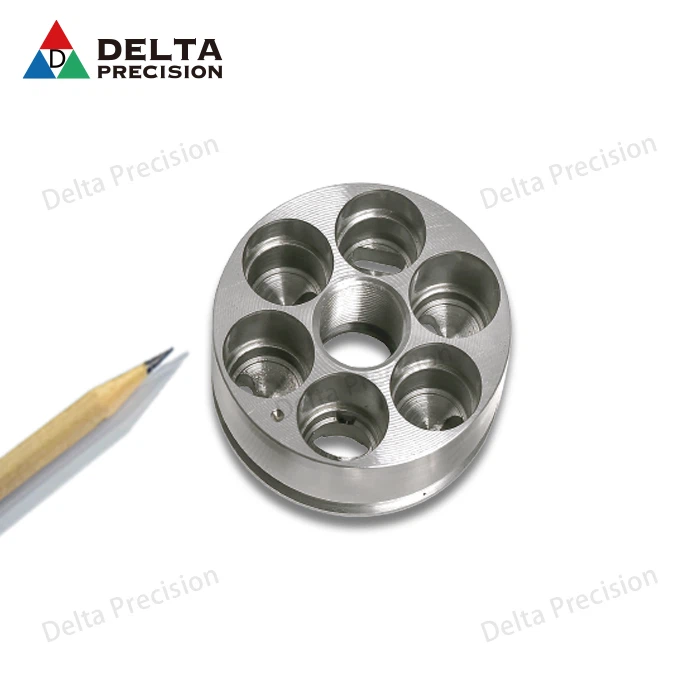
3. Consistent Quality
The simultaneous operation of multiple spindles ensures consistent quality across all parts. Since all spindles are programmed to perform the same operations with the same cutting tools and parameters, each part produced is virtually identical. This reduces the variability that can occur in single - spindle machining, where slight differences in tool wear, setup, or operator skill can lead to variations in part dimensions and surface finish. Consistent quality also means fewer rejects and rework, further improving production efficiency.
4. Cost Savings
In addition to time savings, multi - spindle machining can also result in significant cost savings. By reducing cycle time and increasing productivity, manufacturers can produce more parts with the same amount of labor and equipment. This leads to lower per - part costs, making multi - spindle machining a cost - effective solution for high - volume production. Moreover, the reduced need for multiple machine setups and tool changes also reduces tooling costs and maintenance requirements.
Real - World Applications of Multi - spindle Machining
Multi - spindle machining is widely used in various industries, including automotive, aerospace, electronics, and medical. In the automotive industry, for example, multi - spindle machines are used to produce engine components, transmission parts, and brake components. These parts often require multiple machining operations, such as drilling, tapping, and turning, which can be efficiently completed using multi - spindle machines.
In the aerospace industry, multi - spindle machining is used to manufacture complex components with high precision requirements. The ability to perform multiple operations simultaneously on a single machine ensures that these components are produced with the required accuracy and surface finish. Similarly, in the electronics industry, multi - spindle machines are used to produce small, intricate parts such as connectors and switches.
The medical industry also benefits from multi - spindle machining, especially in the production of surgical instruments and implants. The high precision and consistent quality offered by multi - spindle machines are crucial for ensuring the safety and effectiveness of these medical devices.
Comparison with Other Machining Processes
1. Automatic Bar Machining
Automatic Bar Machining is another popular machining process that is often used for high - volume production. While automatic bar machining can also achieve high production rates, multi - spindle machining offers several advantages. Multi - spindle machines can perform multiple operations simultaneously, which is not always possible with automatic bar machines. This allows for more complex parts to be produced in a single setup, reducing the need for secondary operations.
2. CNC Turning
CNC Turning is a common machining process used to produce cylindrical parts. While CNC turning is highly versatile and can produce parts with high precision, multi - spindle machining can offer faster cycle times for parts that require multiple operations. For example, if a part requires both turning and drilling operations, a multi - spindle machine can perform these operations simultaneously, while a CNC turning machine would need to perform them sequentially.
Challenges and Considerations
Despite its many advantages, multi - spindle machining also presents some challenges. One of the main challenges is the initial investment cost. Multi - spindle machines are more expensive than single - spindle machines, and the cost of tooling and programming can also be significant. However, for high - volume production, the long - term cost savings and increased productivity often justify the initial investment.
Another challenge is the complexity of programming and setup. Multi - spindle machines require more advanced programming skills and a deeper understanding of machining processes. Incorrect programming can lead to errors, reduced quality, and increased cycle times. Therefore, it is essential to have skilled operators and programmers who are familiar with multi - spindle machining.
Conclusion
In conclusion, multi - spindle machining has the potential to significantly improve production efficiency in modern manufacturing. Its ability to perform multiple operations simultaneously, reduce cycle time, increase productivity, ensure consistent quality, and save costs makes it an attractive option for high - volume production. While there are some challenges associated with multi - spindle machining, such as high initial investment and complex programming, the benefits far outweigh the drawbacks.
As a supplier of Multi - spindle Machining services, I am committed to helping manufacturers leverage the advantages of this technology to enhance their production processes. If you are interested in exploring how multi - spindle machining can improve your production efficiency, I encourage you to contact me for a detailed discussion and to explore potential procurement opportunities.
References
- Groover, M. P. (2010). Fundamentals of Modern Manufacturing: Materials, Processes, and Systems. Wiley.
- Kalpakjian, S., & Schmid, S. R. (2013). Manufacturing Engineering and Technology. Pearson.
- Trent, E. M., & Wright, P. K. (2000). Metal Cutting. Butterworth - Heinemann.