

Glaucoma is a prevalent and potentially blinding eye disease characterized by increased intraocular pressure (IOP) that damages the optic nerve. Minimally invasive glaucoma surgeries (MIGS) have emerged as a revolutionary approach to managing glaucoma, offering less invasive alternatives to traditional surgeries with quicker recovery times and fewer complications. Among the various MIGS devices, the IStent Inject has gained significant attention. As a supplier of the IStent Inject, I am well - versed in its features and how it compares to other MIGS procedures.
Overview of Minimally Invasive Glaucoma Surgeries (MIGS)
MIGS procedures are designed to lower IOP by improving the outflow of aqueous humor, the clear fluid in the eye, or by reducing its production. These surgeries typically involve small incisions, are performed under local anesthesia, and have a lower risk profile compared to traditional glaucoma surgeries such as trabeculectomy. The goal of MIGS is to achieve a moderate reduction in IOP while minimizing the impact on the patient's daily life and reducing the potential for long - term complications.
There are several types of MIGS, each targeting different parts of the eye's drainage system. Some MIGS devices work on the trabecular meshwork, the eye's natural drainage pathway, while others target the suprachoroidal space or the subconjunctival space. For example, procedures like iStent implantation, CyPass Micro-Stent, and Xen Gel Stent are all MIGS options that aim to enhance aqueous humor outflow.
Introduction to the IStent Inject
The IStent Inject is a micro - invasive glaucoma device designed to improve the outflow of aqueous humor from the anterior chamber of the eye into the Schlemm's canal. It is a tiny, titanium device that is inserted through a small corneal incision using a specialized injector. The IStent Inject can deliver up to two stents in a single procedure, providing an immediate and direct pathway for aqueous humor to bypass the trabecular meshwork and enter the Schlemm's canal, thereby reducing IOP.
One of the key advantages of the IStent Inject is its minimally invasive nature. The procedure can be performed in conjunction with cataract surgery or as a standalone procedure. When combined with cataract surgery, it adds minimal time to the overall surgical process and has a low risk of complications. The small size of the stents and the injector reduces the trauma to the eye, resulting in a quicker recovery time for the patient compared to more invasive surgeries.
Comparison of the IStent Inject with Other MIGS
Efficacy
In terms of efficacy, the IStent Inject has shown promising results in reducing IOP. Clinical studies have demonstrated that the IStent Inject can achieve significant and sustained IOP reduction in patients with mild to moderate glaucoma. For instance, in many cases, patients experience a reduction in IOP of 20 - 30% after the procedure.
Compared to some other MIGS devices, the IStent Inject's ability to deliver multiple stents in a single procedure may provide a more effective reduction in IOP. For example, the CyPass Micro - Stent is a single - stent device, and while it also offers IOP reduction, the option of placing two stents with the IStent Inject may offer a greater potential for IOP control, especially in patients with higher baseline IOP.
However, the efficacy of MIGS can vary depending on the patient's individual characteristics, such as the severity of glaucoma, the health of the trabecular meshwork, and the presence of other ocular conditions. Some patients may respond better to one MIGS device over another, and in some cases, a combination of MIGS procedures may be required to achieve optimal IOP control.
Safety
Safety is a crucial factor when comparing MIGS. The IStent Inject has a favorable safety profile. Since it is a minimally invasive procedure, the risk of serious complications such as infection, bleeding, and hypotony (abnormally low IOP) is relatively low. The small size of the stents and the injector reduces the risk of damage to the surrounding ocular tissues.
In contrast, some other MIGS procedures may carry a slightly higher risk of complications. For example, the Xen Gel Stent, which is implanted in the subconjunctival space, has a small risk of conjunctival erosion and hypotony. The CyPass Micro - Stent, while generally safe, may have a risk of stent occlusion over time. The IStent Inject's design and placement within the Schlemm's canal seem to minimize these risks, making it a safer option for many patients, especially those who are at a higher risk of complications from more invasive surgeries.
Surgical Technique and Ease of Use
The IStent Inject offers a relatively straightforward surgical technique. The injector is designed to be user - friendly, allowing surgeons to accurately place the stents in the Schlemm's canal. The procedure can be performed quickly, and the learning curve for surgeons is relatively short. This ease of use makes it an attractive option for both experienced glaucoma surgeons and those new to MIGS procedures.
In comparison, some other MIGS devices may require more complex surgical techniques. For example, the Xen Gel Stent implantation requires a more precise subconjunctival placement, which may be more challenging for some surgeons, especially in patients with a history of previous ocular surgeries or anatomical variations. The ease of use of the IStent Inject means that more surgeons can offer this procedure to their patients, increasing access to effective glaucoma treatment.
Cost - effectiveness
Cost - effectiveness is an important consideration in healthcare. The IStent Inject, when compared to some other MIGS devices, may offer a more cost - effective solution. The procedure can be performed in an outpatient setting, and the relatively low risk of complications reduces the need for long - term follow - up and additional treatments. Additionally, when combined with cataract surgery, it can potentially eliminate the need for multiple surgeries in the future, saving both the patient and the healthcare system money in the long run.
Clinical Applications and Patient Selection
The IStent Inject is suitable for a wide range of patients with open - angle glaucoma, especially those with mild to moderate disease. It is an excellent option for patients who are looking for a minimally invasive way to reduce their IOP and potentially reduce their reliance on glaucoma medications.
Patients who are undergoing cataract surgery are often ideal candidates for the IStent Inject. Combining the two procedures not only addresses the patient's cataract but also provides a long - term solution for their glaucoma. However, patients with advanced glaucoma or those with significant damage to the Schlemm's canal may not be the best candidates for the IStent Inject, as the device relies on a functional Schlemm's canal for proper drainage.
Conclusion
In conclusion, the IStent Inject offers several advantages when compared to other minimally invasive glaucoma surgeries. Its minimally invasive nature, ease of use, favorable safety profile, and potential for effective IOP reduction make it a valuable option for patients with mild to moderate open - angle glaucoma. While other MIGS devices also have their own unique features and benefits, the IStent Inject stands out as a reliable and efficient solution, especially when combined with cataract surgery.
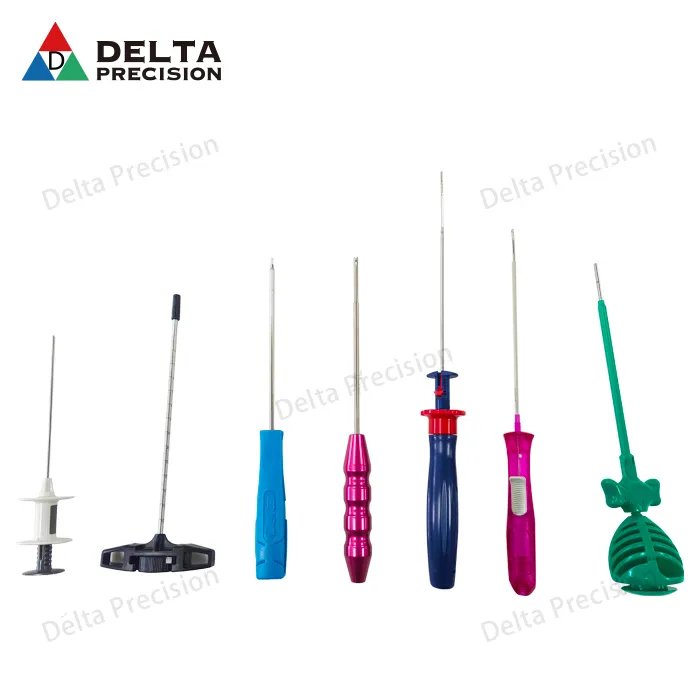
If you are interested in learning more about the IStent Inject or are considering it for your patients, we are here to provide you with all the necessary information and support. We also supply related instruments such as Ophthalmic Small Forceps, Custom Sports Medicine Instruments, and Medical Puncture Instrument. Contact us to start a discussion about procurement and how we can meet your specific needs.

References
- Spaeth, G. L., et al. "Evaluation of the safety and efficacy of the iStent inject micro - invasive glaucoma surgery device in patients with open - angle glaucoma: 24 - month results." Journal of Glaucoma, 2018.
- Budenz, D. L., et al. "Minimally invasive glaucoma surgery." Survey of Ophthalmology, 2017.
- Ritch, R., Shields, M. B., & Krupin, T. The Glaucomas. Mosby, 2017.