

Hey there! As a supplier of small plastic parts, I've been in the trenches of the industry for quite some time. One of the most common questions I get from clients is, "How do I choose the appropriate mold material for small plastic parts?" Well, you're in luck because I'm here to break it down for you.
First off, let's talk about why choosing the right mold material is so important. The mold material you select can have a huge impact on the quality, cost, and production time of your small plastic parts. A good mold material will ensure that your parts are produced with high precision, have a long lifespan, and can withstand the rigors of the injection molding process.
Factors to Consider When Choosing Mold Material
1. Part Complexity and Precision
If your small plastic parts have intricate designs or require high precision, you'll need a mold material that can hold tight tolerances. For example, if you're making parts for Micro Injection Molding, where parts can be as small as a few millimeters, you'll want a material like tool steel. Tool steel is known for its excellent dimensional stability and can be machined to very fine details. It's also very hard, which means it can withstand the high pressures and temperatures involved in the injection molding process without deforming.
On the other hand, if your parts have relatively simple designs and don't require extremely high precision, you might be able to get away with a less expensive mold material, such as aluminum. Aluminum is lightweight, easy to machine, and has good thermal conductivity, which can help speed up the cooling process and reduce cycle times.
2. Production Volume
The number of parts you need to produce is another crucial factor. If you're only making a small batch of parts, say a few hundred or a few thousand, you might not need to invest in a high - end, long - lasting mold material. In this case, a softer material like aluminum or epoxy resin could be a good choice. These materials are relatively inexpensive to machine, so you can keep your upfront costs down.
However, if you're planning to produce large volumes of parts, in the tens of thousands or more, you'll want a mold material that can withstand the repeated use without wearing out quickly. Tool steel is a popular choice for high - volume production because of its durability. It can handle millions of injection molding cycles without significant wear, which means you won't have to replace the mold as often, saving you money in the long run.
3. Plastic Material
The type of plastic you're using to make your small parts also plays a role in choosing the mold material. Some plastics are more abrasive than others, and they can wear down the mold more quickly. For example, filled plastics, which contain additives like glass fibers or carbon fibers, are much more abrasive than unfilled plastics. If you're using a filled plastic, you'll need a harder mold material, such as tool steel or carbide, to resist the wear.
On the other hand, if you're using a relatively soft and non - abrasive plastic, like polyethylene or polypropylene, you might be able to use a softer mold material, like aluminum.
4. Cost
Let's face it, cost is always a consideration. You want to get the best value for your money. As I mentioned earlier, aluminum is generally less expensive than tool steel. It's cheaper to purchase and easier to machine, so the upfront cost of creating a mold out of aluminum can be significantly lower. However, you need to balance the initial cost with the long - term cost. If you're producing a large number of parts, a more expensive but more durable mold material like tool steel might end up being more cost - effective in the long run.
Common Mold Materials for Small Plastic Parts
1. Tool Steel
Tool steel is a workhorse in the injection molding industry. It comes in different grades, such as P20, H13, and D2. P20 is a pre - hardened steel that is easy to machine and is commonly used for medium - to high - volume production of small plastic parts. It has good wear resistance and can hold tight tolerances.
H13 is a hot - work tool steel that is especially suitable for applications where the mold is exposed to high temperatures, such as in Small Part Injection Molding. It has excellent thermal fatigue resistance and can withstand the repeated heating and cooling cycles involved in the injection molding process.
D2 is a high - carbon, high - chromium tool steel that is very hard and has excellent wear resistance. It's often used for molds that need to produce parts with very high precision and a long lifespan.
2. Aluminum
Aluminum is a great choice for small - batch production or prototyping. It's lightweight, which makes it easy to handle and transport. It also has good thermal conductivity, which means the plastic in the mold cools down faster, reducing cycle times. Aluminum molds can be machined quickly and at a relatively low cost, making them ideal for getting a product to market quickly.
3. Epoxy Resin
Epoxy resin molds are often used for very small - scale production or for creating prototypes. They are relatively inexpensive to make and can be cast in a variety of shapes. Epoxy resin molds are not as durable as tool steel or aluminum molds, but they can be a good option if you only need to produce a few parts or if you're testing a new design.
Making the Final Decision
So, how do you make the final decision on which mold material to choose? Well, it's all about weighing the factors we've discussed. Start by looking at your part design, production volume, the type of plastic you're using, and your budget.
If you're still not sure, don't hesitate to reach out to a professional mold maker or a supplier like me. We have the experience and knowledge to help you make the right choice. We can also provide you with samples and cost estimates to help you make an informed decision.
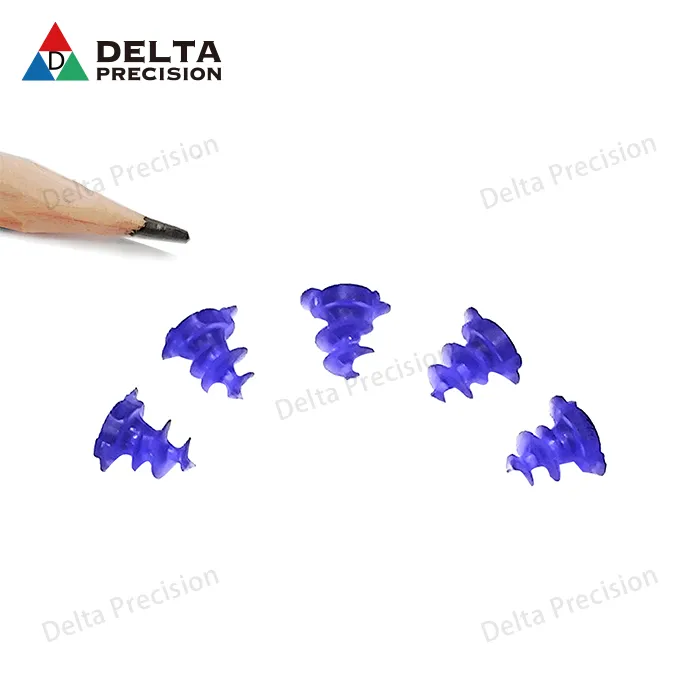

As a small plastic parts supplier, I understand the importance of getting the mold material right. It can make or break your production process. That's why I'm always here to offer my expertise and support. Whether you're just starting out with a new product or looking to improve your existing production, I'm ready to help.
If you're interested in learning more about our small plastic parts or need help choosing the right mold material, feel free to contact us. We're always happy to have a chat and discuss your specific needs. We can work together to find the best solution for your project and ensure that you get high - quality small plastic parts at a competitive price.
In conclusion, choosing the appropriate mold material for small plastic parts is a critical decision that requires careful consideration. By taking into account factors like part complexity, production volume, plastic material, and cost, you can make an informed choice that will benefit your business in the long run.
References
- "Injection Molding Handbook" by O. John Hanna
- "Plastics Materials and Processing" by Donald R. Paul and Charles A. Han