

High-speed CNC precision machining is a revolutionary manufacturing process that combines computer numerical control (CNC) technology with high-speed cutting techniques to achieve extremely precise and efficient production. As a leading supplier of CNC precision machining services, I've witnessed firsthand the diverse applications of this advanced technology across various industries. In this blog, I'll explore some of the key applications of high-speed CNC precision machining and how it can benefit your business.
Aerospace Industry
The aerospace industry demands the highest levels of precision, reliability, and performance from its components. High-speed CNC precision machining plays a crucial role in manufacturing critical aerospace parts, such as turbine blades, engine components, and structural elements. These parts require tight tolerances, complex geometries, and high surface finishes to ensure optimal performance and safety.
With high-speed CNC machining, we can produce aerospace components with exceptional accuracy and repeatability. The advanced cutting tools and high spindle speeds allow us to remove material quickly and efficiently, reducing production time and costs. Additionally, the ability to machine complex shapes and contours enables us to create lightweight and aerodynamic designs that improve fuel efficiency and reduce emissions.

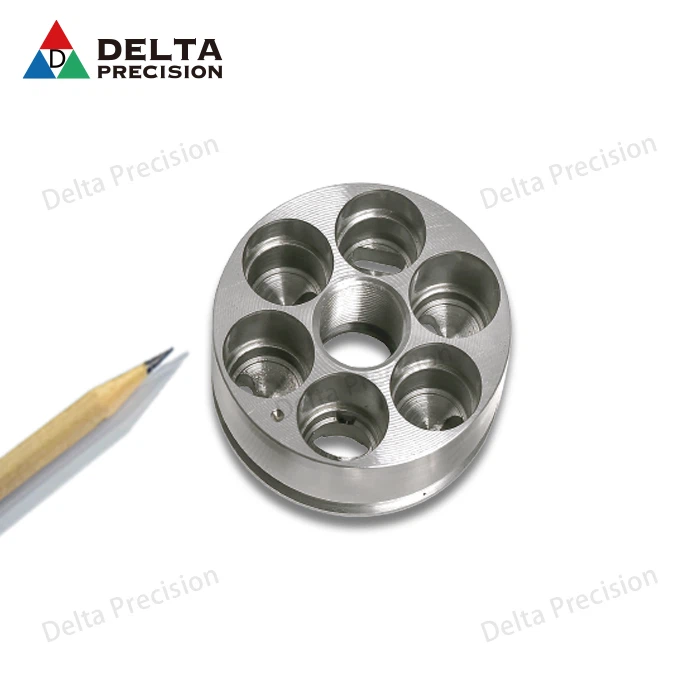
For example, turbine blades are one of the most critical components in an aircraft engine. These blades are subjected to extreme temperatures, pressures, and forces, and must be manufactured with the highest level of precision. High-speed CNC machining allows us to produce turbine blades with complex airfoil shapes and internal cooling channels, which improve the efficiency and performance of the engine.
Automotive Industry
The automotive industry is another major user of high-speed CNC precision machining. From engine blocks and transmission components to suspension parts and brake systems, high-speed CNC machining is used to manufacture a wide range of automotive parts. The automotive industry requires high-volume production, tight tolerances, and consistent quality, and high-speed CNC machining is well-suited to meet these demands.
In the automotive industry, high-speed CNC machining is used to produce complex parts with high accuracy and repeatability. The ability to machine multiple parts simultaneously on a multi-axis CNC machine reduces production time and costs. Additionally, the use of advanced cutting tools and coolant systems helps to improve the surface finish and reduce tool wear, resulting in higher-quality parts.
For example, engine blocks are one of the most complex and critical components in an automobile. These blocks must be machined to very tight tolerances to ensure proper fit and function of the engine components. High-speed CNC machining allows us to produce engine blocks with complex internal passages and mounting surfaces, which improve the performance and reliability of the engine.
Medical Industry
The medical industry requires the highest levels of precision and quality in the manufacturing of medical devices and implants. High-speed CNC precision machining is used to produce a wide range of medical components, such as surgical instruments, orthopedic implants, and dental prosthetics. These components must be manufactured with extreme precision to ensure proper fit, function, and biocompatibility.
High-speed CNC machining allows us to produce medical components with complex geometries and tight tolerances. The use of advanced materials, such as titanium and stainless steel, requires specialized cutting tools and machining techniques to ensure optimal performance. Additionally, the ability to produce small and intricate parts with high accuracy makes high-speed CNC machining ideal for the medical industry.
For example, orthopedic implants are used to replace damaged or diseased joints in the body. These implants must be designed and manufactured to fit the specific anatomy of the patient and provide long-term stability and functionality. High-speed CNC machining allows us to produce orthopedic implants with complex shapes and surface finishes, which improve the fit and performance of the implant.
Electronics Industry
The electronics industry is constantly evolving, with new products and technologies being introduced at a rapid pace. High-speed CNC precision machining is used to manufacture a wide range of electronic components, such as printed circuit boards (PCBs), connectors, and heat sinks. These components must be manufactured with high precision and accuracy to ensure proper function and reliability of the electronic devices.
In the electronics industry, high-speed CNC machining is used to produce small and intricate parts with tight tolerances. The ability to machine complex shapes and patterns on PCBs and other electronic components allows for the miniaturization of electronic devices. Additionally, the use of advanced materials, such as aluminum and copper, requires specialized cutting tools and machining techniques to ensure optimal performance.
For example, heat sinks are used to dissipate heat from electronic components, such as microprocessors and power amplifiers. These heat sinks must be designed and manufactured to provide efficient heat transfer and cooling. High-speed CNC machining allows us to produce heat sinks with complex fin structures and surface finishes, which improve the heat dissipation efficiency of the heat sink.
Mold and Die Industry
The mold and die industry is responsible for manufacturing the tools and molds used in the production of a wide range of products, including plastic injection molded parts, die-cast parts, and stamped parts. High-speed CNC precision machining is used to produce these molds and dies with high accuracy and repeatability.
In the mold and die industry, high-speed CNC machining is used to produce complex shapes and contours on the molds and dies. The ability to machine hard materials, such as steel and aluminum, with high precision and accuracy allows for the production of high-quality molds and dies. Additionally, the use of advanced cutting tools and coolant systems helps to improve the surface finish and reduce tool wear, resulting in longer tool life and lower production costs.
For example, plastic injection molds are used to produce a wide range of plastic products, such as automotive parts, consumer goods, and medical devices. These molds must be designed and manufactured to produce parts with high precision and accuracy. High-speed CNC machining allows us to produce plastic injection molds with complex cavities and cores, which improve the quality and efficiency of the injection molding process.
Prototyping and Small-Batch Production
High-speed CNC precision machining is also widely used in prototyping and small-batch production. Prototyping is an important step in the product development process, allowing manufacturers to test and validate their designs before mass production. High-speed CNC machining allows us to produce prototypes quickly and accurately, reducing the time and cost of the prototyping process.
In small-batch production, high-speed CNC machining is used to produce a limited number of parts with high precision and quality. The ability to quickly change the tooling and programming on a CNC machine allows for the production of different parts in small quantities. This flexibility makes high-speed CNC machining ideal for small-batch production, where the cost of tooling and setup can be a significant factor.
For example, CNC Prototyping Machining is a process that uses CNC machines to produce prototypes from a variety of materials, such as plastics, metals, and composites. This process allows manufacturers to quickly test and validate their designs before committing to mass production.
Conclusion
High-speed CNC precision machining is a versatile and powerful manufacturing process that offers a wide range of applications across various industries. From aerospace and automotive to medical and electronics, high-speed CNC machining is used to produce critical components with high precision, accuracy, and quality. As a supplier of CNC precision machining services, we have the expertise and experience to meet the unique needs of our customers.
If you're looking for a reliable and experienced CNC precision machining supplier, we'd love to hear from you. Whether you need a single prototype or a large production run, we can provide you with high-quality parts at competitive prices. Contact us today to discuss your project requirements and learn more about how our high-speed CNC precision machining services can benefit your business.
References
- "CNC Machining: A Comprehensive Guide." Manufacturing.net.
- "High-Speed Machining: Principles and Applications." Society of Manufacturing Engineers.
- "The Aerospace Industry and Precision Machining." Precision Machining Magazine.
- "Automotive Manufacturing and CNC Machining." Automotive World.
- "Medical Device Manufacturing with CNC Machining." Medical Design and Outsourcing.
- "Electronics Manufacturing and Precision Machining." Electronics Weekly.
- "Mold and Die Making with CNC Machining." MoldMaking Technology.