

As a supplier of small plastic parts, I understand the critical role that cooling methods play in the production process. Effective cooling not only ensures the quality and dimensional accuracy of the parts but also significantly impacts production efficiency. In this blog, I will explore various cooling methods used for small plastic parts during production, their advantages, and considerations.
1. Air Cooling
Air cooling is one of the simplest and most commonly used methods for cooling small plastic parts. It involves blowing ambient or chilled air over the newly molded parts to dissipate heat.
Advantages
- Cost - effective: It requires minimal equipment investment. All that is needed is a simple air blower or a fan system. This makes it an attractive option for small - scale production or when working with a limited budget.
- Flexibility: Air cooling can be easily adjusted to suit different production needs. The air flow rate and temperature can be controlled to achieve the desired cooling speed. For example, in some cases, increasing the air flow can accelerate the cooling process, while using chilled air can further enhance the cooling effect.
- Non - invasive: Since it does not involve direct contact with the parts, there is no risk of damage to the surface of the plastic parts. This is particularly important for parts with delicate or complex geometries.
Considerations
- Limited cooling capacity: Air has a relatively low heat transfer coefficient compared to other cooling media such as water. As a result, air cooling may be slower, especially for parts with high heat content or large cross - sectional areas.
- Environmental factors: The effectiveness of air cooling can be affected by the ambient temperature and humidity. In hot and humid environments, the cooling efficiency may be reduced.
2. Water Cooling
Water cooling is a more efficient method for removing heat from small plastic parts. It works by circulating water through cooling channels in the mold or by directly immersing the parts in water.
Advantages
- High heat transfer efficiency: Water has a much higher heat transfer coefficient than air, which means it can remove heat from the plastic parts more quickly. This allows for shorter cycle times and increased production rates.
- Precise temperature control: By regulating the temperature of the circulating water, it is possible to achieve precise control over the cooling process. This is crucial for ensuring the dimensional stability and quality of the plastic parts.
- Suitability for high - volume production: Due to its high efficiency, water cooling is well - suited for large - scale production of small plastic parts.
Considerations
- Equipment complexity: Water cooling systems require more complex equipment, including pumps, heat exchangers, and temperature controllers. This increases the initial investment and maintenance costs.
- Risk of corrosion and leakage: Water can cause corrosion in the cooling channels and other components of the system if not properly treated. Additionally, there is a risk of water leakage, which can damage the mold and the production equipment.
3. Cryogenic Cooling
Cryogenic cooling involves using extremely cold substances such as liquid nitrogen or carbon dioxide to rapidly cool the plastic parts.
Advantages
- Ultra - fast cooling: Cryogenic cooling can achieve very high cooling rates, which is beneficial for parts that require rapid solidification to maintain their shape and properties. For example, in some applications where high - precision and high - strength plastic parts are needed, cryogenic cooling can help to achieve these requirements.
- Improved part quality: The rapid cooling can reduce the formation of internal stresses and improve the surface finish of the plastic parts. This results in parts with better mechanical properties and appearance.
Considerations
- High cost: Cryogenic substances such as liquid nitrogen are relatively expensive, and the equipment required for cryogenic cooling is also costly. This makes cryogenic cooling less cost - effective for small - scale production.
- Safety concerns: Handling cryogenic substances requires special safety precautions. Liquid nitrogen and carbon dioxide are extremely cold and can cause frostbite or asphyxiation if not handled properly.
4. Cooling with Phase - Change Materials (PCMs)
Phase - change materials are substances that can absorb or release large amounts of heat during a phase transition, such as from solid to liquid or vice versa.
Advantages
- Energy - efficient: PCMs can store and release heat without significant temperature changes. This means that they can absorb the heat from the plastic parts during the cooling process and release it later, reducing the overall energy consumption of the cooling system.
- Customizable cooling profiles: By selecting PCMs with different melting points, it is possible to design cooling profiles that match the specific requirements of the plastic parts. This can help to optimize the cooling process and improve the quality of the parts.
Considerations
- Limited availability and cost: Some PCMs may be expensive or difficult to obtain. Additionally, the integration of PCMs into the cooling system may require special design and manufacturing processes.
- Performance degradation over time: The performance of PCMs may degrade over multiple cycles of phase transition, which can affect the long - term effectiveness of the cooling system.
5. Cooling in the Context of Injection Molding
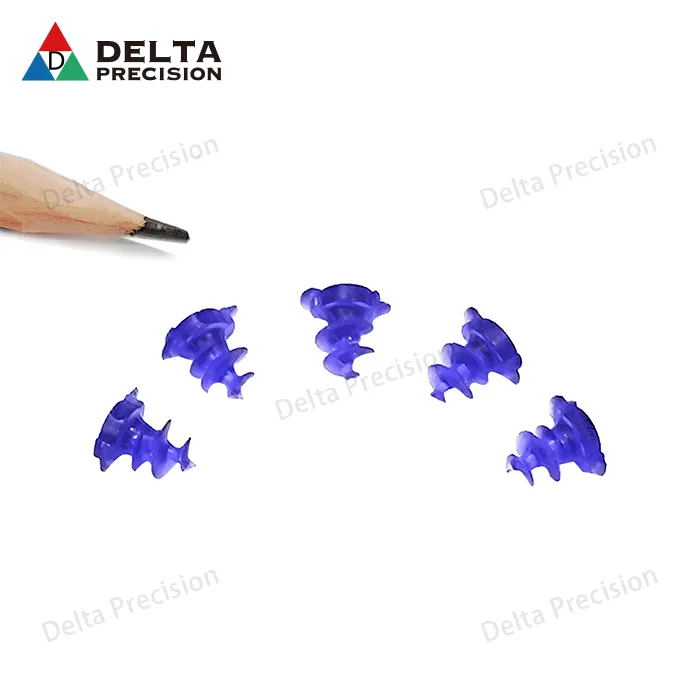
In the production of small plastic parts, injection molding is a widely used process. Both Micro Injection Molding and Small Part Injection Molding require effective cooling methods to ensure the quality of the final products.
During injection molding, the cooling process starts as soon as the molten plastic is injected into the mold. The choice of cooling method can have a significant impact on the cycle time, part quality, and overall production cost. For example, in micro injection molding, where the parts are extremely small and require high precision, cryogenic or water cooling may be preferred to achieve rapid and uniform cooling.
In small part injection molding, a combination of air and water cooling may be used. Air cooling can be used for initial cooling to reduce the temperature of the parts to a certain level, and then water cooling can be employed for more efficient and precise cooling.
Conclusion
Choosing the right cooling method for small plastic parts during production is a critical decision that depends on various factors such as production volume, part geometry, quality requirements, and cost considerations. As a supplier of small plastic parts, I am committed to using the most appropriate cooling methods to ensure the high quality and efficiency of our products.
If you are in the market for high - quality small plastic parts, I encourage you to contact me for a detailed discussion about your specific requirements. We can work together to determine the best production and cooling solutions for your project.

References
- "Plastics Processing--An Introduction" by Osswald, T. A., & Turng, L. - S.
- "Injection Molding Handbook" by Rosato, D. V., Rosato, D. V., & Menges, G.