

Hey there! As a supplier in the CNC precision machining industry, I know how crucial cost-saving strategies are. Not only do they help us stay competitive, but they also allow our customers to get high-quality parts at a reasonable price. In this blog, I'm gonna share some effective cost-saving strategies that we've found useful in our business.
1. Material Selection
One of the most significant factors affecting the cost of CNC precision machining is the material you choose. Different materials come with different price tags, and some are more expensive to machine than others. So, it's essential to select the right material for the job.
First, consider the requirements of your part. If the part doesn't need to be made from a high-end, expensive material, don't use it. For example, if a part only needs basic strength and corrosion resistance, aluminum might be a better choice than stainless steel. Aluminum is lighter, easier to machine, and generally less expensive.
Another thing to keep in mind is material waste. Try to choose materials that can be easily sourced in sizes that minimize waste. For instance, if you need a rectangular part, look for materials that come in standard sizes close to the dimensions of your part. This way, you'll use less material overall, which translates to cost savings.
2. Design Optimization
The design of your part can have a huge impact on machining costs. A well-designed part can be machined more efficiently, reducing both time and material waste.
Simplify the design as much as possible. Avoid unnecessary features like deep pockets, sharp corners, or complex geometries. These features often require more time and specialized tools to machine, which drives up the cost. For example, instead of having a part with a sharp internal corner, use a fillet. Fillets are easier to machine and can also improve the strength of the part.
Also, consider the tolerances you specify. Tighter tolerances usually mean more precise machining, which takes more time and can increase the cost. Only specify the tolerances that are truly necessary for the part to function correctly. If a looser tolerance will work just fine, go for it.
3. Process Selection
Choosing the right machining process is key to saving costs. There are several CNC machining processes available, each with its own advantages and disadvantages.

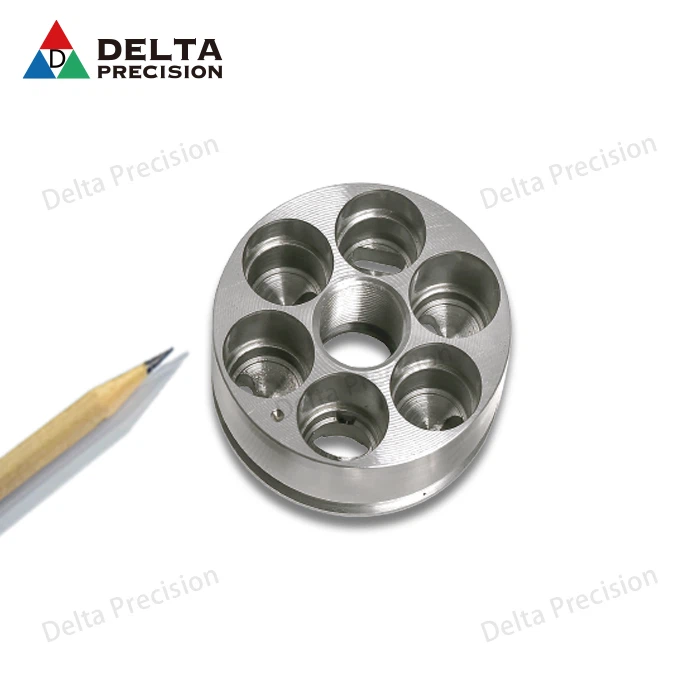
For parts with rotational symmetry, CNC Turning is often a cost-effective option. It's a relatively fast process that can produce high-quality parts with good surface finishes. CNC turning is especially useful for making shafts, pins, and other cylindrical parts.
If you need to machine multiple parts simultaneously, Multi-spindle Machining can be a great choice. This process allows you to machine several parts at the same time, which significantly reduces the overall machining time. It's ideal for high-volume production runs.
Automatic Bar Machining is another cost-saving option. It's designed for machining parts from bar stock, and it can operate continuously with minimal operator intervention. This makes it very efficient for producing small to medium-sized parts in large quantities.
4. Tool Management
Tools are a significant expense in CNC precision machining, so it's important to manage them effectively.
Invest in high-quality tools. While they may cost more upfront, they tend to last longer and perform better. This means you'll have to replace them less often, which saves money in the long run.
Also, make sure to use the right tool for the job. Using the wrong tool can lead to poor-quality parts, increased machining time, and premature tool wear. For example, if you're machining a hard material, use a tool that's designed for that specific material.
Regularly maintain your tools. Keep them clean, sharp, and properly lubricated. This will extend their lifespan and ensure consistent performance. You can also implement a tool tracking system to keep track of tool usage and replacement schedules.
5. Production Planning
Good production planning can help you optimize your machining operations and save costs.
Batch production is a great way to reduce costs. Instead of machining parts one by one, group similar parts together and machine them in batches. This allows you to set up the machine once and run multiple parts, which saves time and reduces setup costs.
Also, try to minimize machine downtime. Schedule maintenance and tool changes during periods when the machine isn't needed for production. You can also use software to optimize the machining sequence and reduce idle time between operations.
6. Supplier Negotiation
As a supplier, I know that negotiation is an important part of doing business. When sourcing materials and services, don't be afraid to negotiate with your suppliers.
Try to get volume discounts. If you're buying a large quantity of materials or services, ask your supplier if they can offer a lower price. Many suppliers are willing to negotiate, especially if they want to keep your business.
You can also negotiate payment terms. For example, see if you can get a longer payment period or a discount for early payment. This can help improve your cash flow and reduce your overall costs.
7. Quality Control
While it may seem counterintuitive, investing in quality control can actually save you money in the long run.
By catching and correcting defects early in the machining process, you can avoid costly rework or scrap. Implement a comprehensive quality control system that includes inspections at various stages of production. This way, you can identify and address any issues before they become major problems.
You can also use statistical process control (SPC) techniques to monitor the machining process and ensure that it's operating within acceptable limits. SPC can help you detect trends and make adjustments before defects occur, which saves both time and money.
In conclusion, there are many cost-saving strategies that you can implement in CNC precision machining. By carefully considering material selection, design optimization, process selection, tool management, production planning, supplier negotiation, and quality control, you can reduce your costs and improve your bottom line.
If you're interested in learning more about how we can help you save costs in your CNC precision machining projects, or if you have a specific project you'd like to discuss, feel free to reach out to us. We're always happy to have a chat and see how we can work together to meet your needs.
References
- "CNC Machining Handbook"
- "Manufacturing Engineering and Technology" by Serope Kalpakjian and Steven R. Schmid