

Hey there! As a supplier of small plastic parts, I've been knee - deep in the world of plastic manufacturing for quite some time. One topic that keeps coming up in discussions with clients and industry folks is the effects of different gate sizes on small plastic parts. So, let's dive right in and explore this in detail.
First off, what exactly is a gate in the context of plastic part manufacturing? Well, in injection molding (you can learn more about Micro Injection Molding and Small Part Injection Molding on those links), the gate is the small opening through which the molten plastic enters the mold cavity. It's like the doorway for the plastic to flow into the shape we want our part to take.
Filling and Flow
The size of the gate has a huge impact on how the molten plastic fills the mold cavity. A larger gate allows for a higher flow rate of plastic. This means that the plastic can reach all corners of the mold more quickly. For small plastic parts, this can be a game - changer. If the part has complex geometries or thin walls, a larger gate can ensure that the plastic fills those areas without any issues.
On the other hand, a smaller gate restricts the flow of plastic. The plastic has to squeeze through a narrow opening, which slows down the filling process. This can be a problem for parts with long flow paths or intricate designs. The plastic might cool down before it can fully fill the mold, leading to incomplete parts or parts with voids.
Let's say we're making a small plastic connector with a lot of tiny channels. A large gate would allow the molten plastic to rush in and fill those channels smoothly. But if we use a small gate, the plastic might not make it all the way through, leaving some channels unfilled.
Part Quality
Gate size also affects the quality of the final part. When the plastic flows through a large gate, it experiences less shear stress. Shear stress is the force that acts on the plastic as it moves through the gate. High shear stress can cause the plastic molecules to break down, which can weaken the part.
With a small gate, the shear stress is much higher because the plastic is forced through a narrow opening. This can lead to a number of quality issues. The part might have a lower strength, be more brittle, or have a poor surface finish. For example, if we're making small plastic gears, high shear stress from a small gate could cause the teeth of the gear to be weaker and more prone to wear and tear.
Another aspect of part quality is the appearance. A large gate can sometimes leave a larger mark on the part where it was attached. This mark might need to be removed through additional finishing processes. A small gate, on the other hand, leaves a smaller mark, which is often easier to deal with. However, as we've seen, the trade - off is that small gates can cause other quality problems.
Cycle Time
Cycle time is the time it takes to complete one full injection molding cycle, from the moment the plastic is injected into the mold to the moment the part is ejected. Gate size plays a role in cycle time as well.
A larger gate generally allows for a shorter cycle time. Since the plastic fills the mold more quickly, the cooling time can also be reduced. This means that we can produce more parts in a given amount of time. For a small plastic parts supplier like me, this is a big deal. It allows us to increase our production capacity and meet the demands of our customers more efficiently.
A smaller gate, due to the slower filling process, usually results in a longer cycle time. The plastic takes more time to reach all parts of the mold, and then it also takes longer to cool down because the flow is more restricted. This can slow down our production line and increase the cost per part.
Gate Vestige and Post - Processing
As I mentioned earlier, the gate leaves a mark on the part, known as the gate vestige. The size of this vestige depends on the gate size. A large gate will leave a larger vestige, which might require more extensive post - processing to remove. This can add to the production cost and time.
For small plastic parts, especially those used in precision applications, a large gate vestige might not be acceptable. We might have to use secondary operations like machining or grinding to get rid of it. With a small gate, the vestige is smaller, and it's often easier to remove. Sometimes, a simple deburring operation might be enough.
Material Considerations
Different plastics have different flow properties, and this also interacts with gate size. Some plastics, like polypropylene, have good flow characteristics and can handle a smaller gate more easily. These plastics can flow through a narrow opening without too much trouble and still fill the mold properly.
Other plastics, such as polycarbonate, are more viscous. They need a larger gate to flow smoothly. If we try to use a small gate with a viscous plastic, we're likely to run into problems like incomplete filling or high shear stress.
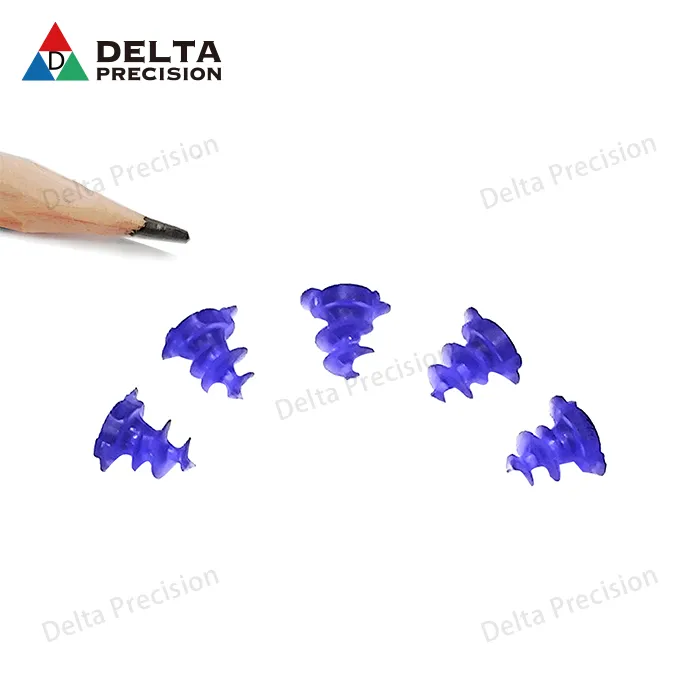

So, when choosing the gate size for a small plastic part, we need to take into account the type of plastic we're using. It's all about finding the right balance between the plastic's properties and the gate size to get the best results.
Cost - Benefit Analysis
As a small plastic parts supplier, cost is always a major consideration. Using a large gate might increase the initial cost of the mold because it requires a larger opening. However, it can save money in the long run by reducing cycle time and improving part quality.
On the other hand, a small gate might have a lower initial mold cost, but it can lead to higher production costs due to longer cycle times and potential quality issues. We need to do a cost - benefit analysis for each project to determine the most cost - effective gate size.
In conclusion, the gate size has a profound impact on small plastic parts. It affects filling, part quality, cycle time, gate vestige, and cost. As a supplier, we need to carefully consider all these factors when designing the mold for a small plastic part.
If you're in the market for high - quality small plastic parts, I'd love to chat with you. Whether you're looking for parts with complex geometries or simple designs, we have the expertise to choose the right gate size and ensure that you get the best possible parts. Let's start a conversation about your project and see how we can work together to meet your needs.
References
- “Injection Molding Handbook” by O. Olabisi
- “Plastic Materials” by J. A. Brydson