

Hey there! As a supplier of small plastic parts, I've seen firsthand how different part geometries can have a huge impact on the production process. In this blog post, I'm going to break down the effects of various part geometries on small plastic parts production.
Simple Geometries: The Easy Riders
Let's start with the simplest geometries - those parts that are basically just cubes, cylinders, or flat sheets. These are the easiest to produce, and here's why.
First off, the tooling for simple geometries is a breeze. The molds are straightforward to design and manufacture. There aren't a lot of intricate details or undercuts to worry about, so the mold-making process is faster and less expensive. For example, if you're making a small plastic cube, the mold can be designed with just two halves that fit together perfectly. This simplicity also means that the mold is less likely to break or wear out quickly, which saves on maintenance costs in the long run.
In terms of the injection molding process itself, simple geometries are great. The plastic flows evenly into the mold cavity, and it's easier to control the filling process. There's less chance of air pockets or voids forming, which can weaken the part. This results in a higher yield of good-quality parts, reducing waste and production costs.
However, don't think that simple geometries are always the best option. They might be easy to produce, but they may not always meet the specific requirements of your product. Sometimes, you need more complex shapes to fit a particular function or design aesthetic.
Complex Geometries: The Challengers
Now, let's talk about the more complex geometries - parts with undercuts, thin walls, or multiple features. These can be a real challenge to produce, but they also offer unique benefits.
Undercuts are areas of the part that prevent it from being ejected from the mold in a straight line. To deal with undercuts, we often need to use more complex mold designs, such as side actions or slides. These additional components in the mold increase the cost and complexity of the tooling. They also add more moving parts, which can increase the risk of mechanical failure during the molding process.
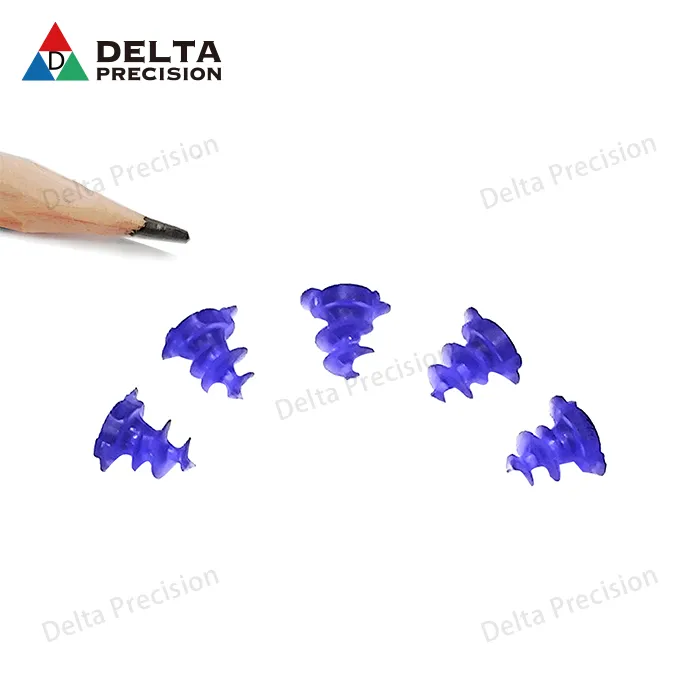

Thin walls are another tricky aspect of complex geometries. When the walls of a part are very thin, the plastic has to flow a long way through a narrow space. This can lead to issues like short shots, where the plastic doesn't fully fill the mold cavity. To overcome this, we may need to increase the injection pressure or temperature, which can put more stress on the mold and the plastic itself. It also requires more precise control of the molding process to ensure consistent part quality.
On the other hand, complex geometries can give your product a competitive edge. They allow for more innovative designs and can integrate multiple functions into a single part. For example, a small plastic part with complex internal channels can be used for fluid flow in a medical device, eliminating the need for multiple separate components.
The Impact on Material Selection
Different part geometries also influence the choice of plastic material. For simple geometries, a wider range of materials can be used because the molding process is less demanding. You can choose materials based on factors like cost, strength, and chemical resistance.
However, for complex geometries, the material selection becomes more critical. Some materials may not flow well enough to fill thin walls or intricate features. In these cases, we may need to use materials with better flow properties, even if they are more expensive. For example, high-flow polycarbonates are often used for parts with thin walls because they can flow easily into the mold cavity without creating defects.
The Role of Technology
Technology plays a big role in dealing with different part geometries. Advanced simulation software can help us predict how the plastic will flow in the mold before we even start making the tooling. This allows us to optimize the mold design and the molding process parameters to ensure a successful production run.
For example, Small Part Injection Molding techniques have evolved to handle more complex geometries. These techniques use precise control of the injection process to ensure that the plastic fills the mold cavity evenly, even for parts with thin walls or undercuts.
Another technology that's making a big difference is Micro Injection Molding. This is ideal for producing very small plastic parts with high precision. It can handle complex geometries at a micro scale, opening up new possibilities for industries like medical devices and electronics.
Cost Considerations
The cost of producing small plastic parts is significantly affected by the part geometry. As I mentioned earlier, simple geometries generally have lower tooling and production costs. The mold is cheaper to make, and the molding process is more efficient, resulting in lower per-part costs.
Complex geometries, on the other hand, can drive up costs. The more complex the mold design, the more expensive it is to manufacture. There's also a higher risk of defects and scrap, which can increase the overall cost of production. However, it's important to consider the value that a complex part can bring to your product. Sometimes, the benefits of a complex geometry, such as improved functionality or a unique design, can outweigh the higher costs.
Quality Control
Quality control is crucial when producing small plastic parts, especially when dealing with different geometries. For simple geometries, it's relatively easy to inspect the parts for defects. Basic measurements and visual inspections can often identify any issues.
For complex geometries, quality control becomes more challenging. We need to use more advanced inspection techniques, such as coordinate measuring machines (CMMs) or X-ray inspection, to ensure that the parts meet the required specifications. These techniques can detect internal defects, such as voids or incorrect wall thicknesses, that may not be visible to the naked eye.
Conclusion
In conclusion, different part geometries have a significant impact on small plastic parts production. Simple geometries are easy to produce, with lower costs and fewer challenges, but they may not always meet your product's needs. Complex geometries offer more design flexibility and functionality but come with higher costs and production challenges.
As a small plastic parts supplier, I'm always looking for ways to optimize the production process for different part geometries. Whether you need a simple cube or a highly complex micro part, I have the expertise and technology to deliver high-quality products.
If you're in the market for small plastic parts, I'd love to have a chat with you. Let's discuss your specific requirements and how we can work together to find the best solution for your project. Whether it's about the part geometry, material selection, or cost optimization, I'm here to help. Reach out and let's start a conversation about your next small plastic parts order.
References
- Throne, J. L. (1996). Polymer Rheology: Theory and Practice. Marcel Dekker.
- Rosato, D. V., & Rosato, D. V. (2000). Injection Molding Handbook. Kluwer Academic Publishers.