

Hey there! As a supplier of Dialysis Spinneret, I've been really into understanding how the anisotropy of these spinneret materials impacts their performance. So, let's dig into it!
What is Anisotropy?
First off, what's this whole "anisotropy" thing? Well, materials can be either isotropic or anisotropic. Isotropic materials have the same properties in all directions. Think of a uniform block of plastic where no matter which way you measure its strength or other properties, you get the same result.
On the other hand, anisotropic materials have different properties depending on the direction you're looking at. For example, a piece of wood is anisotropic. It's much easier to split along the grain than against it. In the context of a Dialysis Spinneret, the material's anisotropy can play a huge role in how well it works.
Impact on Mechanical Properties
One of the most obvious effects of anisotropy is on the mechanical properties of the Dialysis Spinneret. When the material is anisotropic, its strength and stiffness can vary in different directions.
Let's say we're talking about the strength of the spinneret. If the material has higher strength in one direction compared to others, it means that during the manufacturing process or when in use, the spinneret might be more prone to failure in the weaker directions. For instance, if the spinneret is under pressure during the dialysis process, and the material's anisotropy causes a weak point in a certain direction, it could lead to cracking or deformation.
This is a big deal because a damaged Dialysis Spinneret can affect the quality of the dialysis fibers being produced. The fibers might come out with irregular diameters or have defects, which can compromise the overall performance of the dialysis equipment.
Stiffness is another important mechanical property. Anisotropic materials can have different stiffness values in different directions. This can cause issues during the spinning process. If the spinneret is not stiff enough in a particular direction, it might bend or flex when the polymer solution is being forced through the Precision Small Nozzle. This can lead to inconsistent fiber production, with some fibers being thinner or thicker than others.
Influence on Flow Characteristics
The anisotropy of the Dialysis Spinneret material also affects the flow characteristics of the polymer solution. In an isotropic material, the flow of the solution through the spinneret would be more or less uniform in all directions. But with an anisotropic material, the situation is different.
The material's structure can act as a sort of "guide" for the polymer solution. If the material has a preferred direction due to its anisotropy, the solution might flow more easily in that direction. This can result in uneven distribution of the solution within the spinneret. Some of the Precision Small Nozzles might receive more solution than others, leading to differences in fiber thickness and quality.
Moreover, the anisotropy can also affect the viscosity of the polymer solution as it passes through the spinneret. In directions where the material has a more open or porous structure (due to anisotropy), the solution might experience less resistance and flow more freely. This can change the shear stress and shear rate of the solution, which in turn can affect the final properties of the resulting fibers.

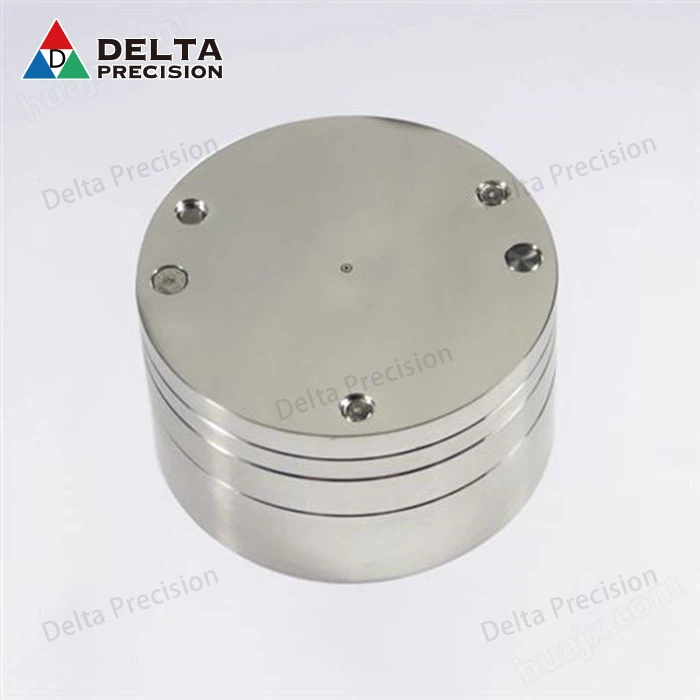
Effects on Surface Finish
The surface finish of the Dialysis Spinneret is crucial for the quality of the fibers. Anisotropy can have an impact on how the surface of the spinneret is machined and how it behaves during use.
During the machining process, the anisotropy of the material can cause uneven cutting. The tool might encounter different levels of resistance depending on the direction it's cutting in. This can result in a rougher surface finish in some areas compared to others. A rough surface can cause problems for the polymer solution as it passes through the Precision Small Nozzle. It can cause the solution to stick or form irregularities in the flow, which can translate into defects in the fibers.
Even after the machining is done, the anisotropy can still affect the surface. Over time, as the spinneret is used, the material might wear differently in different directions. This can lead to changes in the surface profile, which can again impact the quality of the fibers being produced.
Impact on Dimensional Stability
Dimensional stability is another key factor when it comes to the performance of a Dialysis Spinneret. Anisotropic materials can expand or contract differently in different directions when exposed to changes in temperature or humidity.
For example, if the spinneret is used in an environment where the temperature fluctuates, the anisotropy of the material can cause it to warp or change shape. This can be a major problem because the precise dimensions of the spinneret are critical for producing high - quality fibers. Even a small change in the dimensions of the Precision Small Nozzle can lead to significant differences in the fiber diameter and other properties.
How We Deal with Anisotropy as a Supplier
As a supplier of Dialysis Spinneret, we're well aware of these issues caused by anisotropy. We use high - quality materials and advanced manufacturing techniques to minimize the impact of anisotropy.
We carefully select materials that have a relatively low level of anisotropy or can be processed in a way that reduces its effects. During the machining process, we pay close attention to the orientation of the material to ensure that we're working with the most favorable directions. We also use precision machining tools, like Lead Screw systems, to ensure accurate and consistent machining.
And of course, we conduct rigorous quality control checks. We test the mechanical properties, flow characteristics, surface finish, and dimensional stability of our Dialysis Spinneret to make sure they meet the highest standards.
Let's Connect!
If you're in the market for high - quality Dialysis Spinneret or want to learn more about how we deal with the anisotropy issue, don't hesitate to get in touch. We're here to help you understand the impact of material properties on performance and provide you with the best solutions for your needs.
References
- Jones, A. B. (2018). Material Science in Medical Device Manufacturing. Springer.
- Smith, C. D. (2020). Anisotropy in Polymer - Based Materials for Biomedical Applications. Journal of Biomedical Engineering, 35(2), 123 - 135.