

As a seasoned supplier of Damper Pistons, I've witnessed firsthand the intricate and fascinating manufacturing processes that bring these crucial components to life. In this blog post, I'll take you through the step-by-step journey of creating a Damper Piston, from raw materials to the finished product.
Raw Material Selection
The foundation of any high-quality Damper Piston lies in the careful selection of raw materials. We typically use high-strength steel alloys, such as carbon steel or stainless steel, due to their excellent mechanical properties, including high tensile strength, hardness, and corrosion resistance. These materials ensure that the Damper Piston can withstand the extreme forces and harsh operating conditions it will encounter in a shock absorber system.
The raw materials are sourced from reputable suppliers who adhere to strict quality control standards. Before being used in production, the materials undergo thorough testing to ensure they meet our specifications. This includes chemical analysis to verify the composition of the alloy, as well as mechanical testing to assess its strength and ductility.
Machining the Blank
Once the raw materials have been selected and approved, the first step in the manufacturing process is to machine the blank. This involves cutting the raw material into the approximate shape of the Damper Piston using a variety of machining techniques, such as turning, milling, and drilling.
Turning is a common machining process used to create the cylindrical shape of the Damper Piston. In this process, the raw material is rotated on a lathe while a cutting tool is used to remove material from the outer surface, gradually shaping it into the desired diameter and length. Milling, on the other hand, is used to create flat surfaces, grooves, and other features on the Damper Piston. This process involves using a rotating cutting tool to remove material from the workpiece.
Drilling is another important machining process used to create holes in the Damper Piston. These holes are used for various purposes, such as mounting the piston in the shock absorber and allowing fluid to flow through the piston. The drilling process requires precision and accuracy to ensure that the holes are properly aligned and sized.
Heat Treatment
After the blank has been machined, it undergoes a heat treatment process to improve its mechanical properties. Heat treatment involves heating the Damper Piston to a specific temperature and then cooling it at a controlled rate. This process helps to relieve internal stresses in the material, increase its hardness and strength, and improve its wear resistance.
The specific heat treatment process used depends on the type of material and the desired properties of the Damper Piston. For example, carbon steel pistons may be quenched and tempered to achieve a high level of hardness and strength, while stainless steel pistons may be solution annealed to improve their corrosion resistance.
Surface Finishing
Once the heat treatment process is complete, the Damper Piston undergoes a surface finishing process to improve its appearance and performance. Surface finishing involves removing any rough edges or burrs from the piston and applying a smooth, protective coating to its surface.
One common surface finishing technique used for Damper Pistons is grinding. Grinding involves using a grinding wheel to remove a small amount of material from the surface of the piston, resulting in a smooth, precise finish. This process helps to improve the piston's dimensional accuracy and surface quality, which is important for its proper functioning in the shock absorber system.

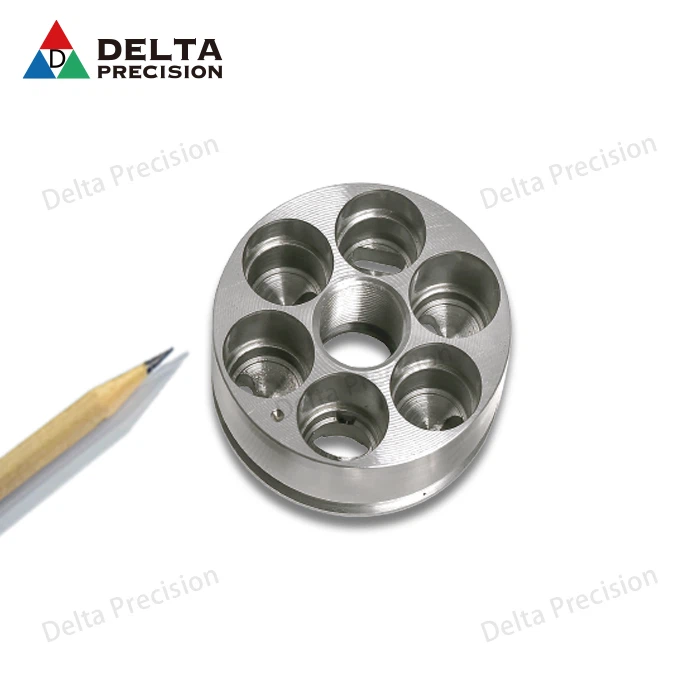
Another surface finishing technique used for Damper Pistons is coating. Coating involves applying a thin layer of material to the surface of the piston to improve its corrosion resistance, wear resistance, and lubricity. Common coating materials used for Damper Pistons include chrome, nickel, and PTFE.
Assembly and Testing
After the surface finishing process is complete, the Damper Piston is ready for assembly. Assembly involves installing the piston into the shock absorber and attaching any necessary components, such as Shock Absorber Valve and Shock Absorber Valve Seat. The assembly process requires precision and attention to detail to ensure that the piston is properly installed and that all components are functioning correctly.
Once the assembly is complete, the shock absorber undergoes a series of tests to ensure its performance and reliability. These tests include functional testing, where the shock absorber is subjected to a variety of operating conditions to evaluate its damping characteristics, and durability testing, where the shock absorber is tested for an extended period of time to ensure its long-term performance.
Quality Control
Throughout the manufacturing process, strict quality control measures are in place to ensure that each Damper Piston meets our high standards of quality and performance. Quality control begins with the selection of raw materials and continues through every stage of the manufacturing process, including machining, heat treatment, surface finishing, assembly, and testing.
We use a variety of quality control tools and techniques, such as statistical process control, non-destructive testing, and dimensional inspection, to monitor and control the quality of our products. This helps us to identify and correct any potential issues early in the manufacturing process, ensuring that our customers receive only the highest quality Damper Pistons.
Conclusion
In conclusion, the manufacturing processes for a Damper Piston are complex and require a high level of precision and expertise. From raw material selection to assembly and testing, every step in the process is carefully controlled to ensure that each Damper Piston meets our strict quality standards.
As a leading supplier of Damper Piston, we are committed to providing our customers with the highest quality products and services. If you are in the market for Damper Pistons or have any questions about our manufacturing processes, please don't hesitate to contact us. We look forward to working with you to meet your needs.
References
- ASM Handbook, Volume 1: Properties and Selection: Irons, Steels, and High-Performance Alloys
- Machining Handbook, 31st Edition
- Automotive Shock Absorber Design and Tuning, Second Edition