

Hey there! As a supplier of small plastic parts, I often get asked about the optical properties of these tiny but mighty components. So, let's dive right in and explore what makes the optical characteristics of small plastic parts so interesting and important.
Understanding the Basics of Optical Properties
First off, what do we mean by optical properties? In simple terms, these are the ways in which a material interacts with light. For small plastic parts, this can include things like transparency, clarity, color, and how light is scattered or absorbed.
Transparency is one of the most well - known optical properties. Some plastics are highly transparent, like polycarbonate and acrylic. These plastics allow light to pass through them almost as if there's nothing there. This makes them great for applications where you need to see through the part, such as lenses in medical devices or clear covers for electronic displays.
Clarity is a bit different from transparency. While transparency refers to the ability of light to pass through, clarity is about how well you can see objects on the other side. A plastic part can be transparent but have poor clarity if it scatters light too much. For example, a frosted plastic might be transparent to some degree, but it won't give you a clear view of what's behind it because the light is being scattered in different directions.
Color is another important optical property. Plastics can be made in a wide range of colors, either by adding pigments during the manufacturing process or by using colored resins. The color of a small plastic part can affect its appearance, but it can also have functional implications. For instance, in some optical sensors, specific colors are used to filter out certain wavelengths of light.

Factors Affecting the Optical Properties of Small Plastic Parts
Now, let's talk about what can influence these optical properties. One of the biggest factors is the type of plastic used. Different plastics have different molecular structures, which determine how they interact with light. For example, polycarbonate has a high refractive index, which means it bends light more than some other plastics. This property makes it useful for applications like eyeglass lenses, where you want to control the path of light.
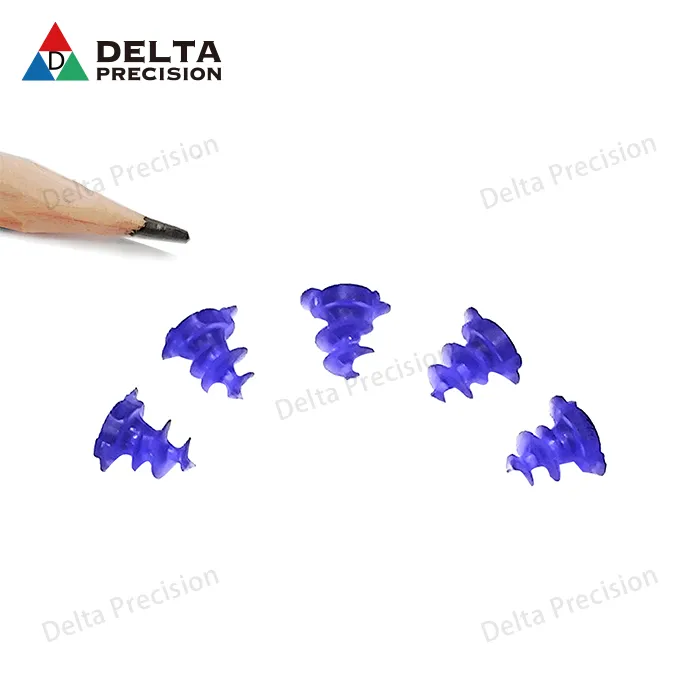
The manufacturing process also plays a crucial role. Micro Injection Molding and Small Part Injection Molding are two common methods for producing small plastic parts. In injection molding, factors like the temperature, pressure, and cooling rate can all affect the optical properties of the final part. If the plastic is cooled too quickly, it can form internal stresses that lead to cloudiness or uneven optical properties.
The presence of additives can also change the optical properties of small plastic parts. For example, anti - static additives can reduce the amount of dust that sticks to the surface of the part, which can improve its clarity. UV stabilizers can prevent the plastic from yellowing over time when exposed to sunlight, maintaining its color and transparency.
Applications of Small Plastic Parts Based on Their Optical Properties
The unique optical properties of small plastic parts make them suitable for a wide variety of applications. In the medical field, small plastic lenses are used in endoscopes and other imaging devices. The high transparency and clarity of these lenses allow doctors to get a clear view inside the human body.
In the electronics industry, small plastic parts are used in displays, sensors, and lighting systems. Transparent plastics can be used as covers for LED lights, protecting the components while allowing the light to shine through. Colored plastics can be used to create decorative elements or to indicate different functions on a device.
In the automotive industry, small plastic parts with specific optical properties are used in headlights, taillights, and interior lighting. The ability to control the way light is scattered and focused is essential for ensuring visibility and safety on the road.
Quality Control of Optical Properties
As a supplier of small plastic parts, ensuring the quality of the optical properties is of utmost importance. We use a variety of testing methods to make sure that each part meets the required standards. For transparency and clarity, we might use a spectrophotometer to measure the amount of light that passes through the part and how it is scattered. Color matching is done using colorimeters to ensure that the parts have the correct color.
We also pay close attention to the surface finish of the parts. A smooth surface is essential for good optical properties, as any roughness or imperfections can scatter light and reduce clarity. During the manufacturing process, we use high - precision molds and polishing techniques to achieve the desired surface finish.
Why Choose Us as Your Small Plastic Parts Supplier
If you're in the market for small plastic parts with specific optical properties, we're here to help. We have years of experience in the industry, and our team of experts knows how to produce high - quality parts that meet your exact requirements.
We use state - of - the - art manufacturing techniques, including Micro Injection Molding and Small Part Injection Molding, to ensure the precision and consistency of our parts. Our quality control processes are rigorous, so you can be confident that you're getting parts with excellent optical properties.
Whether you need a small batch of custom - made parts or a large - scale production run, we can handle it. We're committed to providing excellent customer service, and we'll work closely with you to understand your needs and deliver the best possible solution.
If you're interested in learning more about our small plastic parts or have a specific project in mind, don't hesitate to reach out. We're always happy to have a chat and discuss how we can help you with your optical plastic part needs. Let's start a conversation and see how we can work together to bring your ideas to life!
References
- "Plastics Engineering Handbook", 5th Edition, Hanser Gardner Publications
- "Optical Properties of Polymers", CRC Press