

Hey there! As a supplier in the Micro Injection Molding game, I often get asked about the standards for measuring the optical properties of micro injection molded parts. It's a super important topic, especially when you're dealing with parts that need to have top - notch optical performance, like those used in medical devices, consumer electronics, and automotive applications.
First off, let's talk about why measuring optical properties matters. In micro injection molding, even the tiniest deviation in optical characteristics can have a huge impact on the functionality of the final product. For example, in a medical device that uses optical sensors, inaccurate light transmission or scattering can lead to incorrect readings. So, having clear standards for measurement is crucial.
One of the key optical properties we look at is light transmittance. This measures how much light passes through the molded part. To measure light transmittance, we typically use a spectrophotometer. It shines light of different wavelengths through the part and measures the amount of light that comes out the other side. The standard for light transmittance can vary depending on the application. For instance, in a clear plastic lens for a camera, you'd want a very high transmittance, close to 100% in the visible light spectrum. On the other hand, if the part is used as a light diffuser, a lower and more controlled transmittance might be required.
Another important property is haze. Haze refers to the amount of light that is scattered when passing through the part, causing a cloudy or milky appearance. A high - haze part can reduce the clarity of an image or the efficiency of a light - based system. To measure haze, we use a haze meter. The ASTM D1003 standard is commonly used in the industry. It defines haze as the percentage of transmitted light that deviates from the incident light by more than 2.5 degrees. For applications where high clarity is essential, like display screens or optical lenses, the haze should be kept as low as possible, often below 1%.
Refractive index is also a critical optical property. It describes how light bends when it passes from one medium to another (in this case, from air into the molded plastic). The refractive index affects how light is focused, reflected, and transmitted through the part. We measure the refractive index using a refractometer. The standard refractive index values can vary depending on the type of plastic used in the micro injection molding process. For example, polycarbonate has a refractive index of around 1.58, while acrylic has a refractive index of about 1.49.
Now, let's talk about surface finish. The surface finish of a micro injection molded part can significantly affect its optical properties. A rough surface can cause light scattering and reduce the overall optical performance. We use a profilometer to measure the surface roughness. The Ra (arithmetical mean deviation of the surface) is a commonly used parameter. For optical applications, a low Ra value is desired, usually in the range of a few nanometers to a few micrometers.
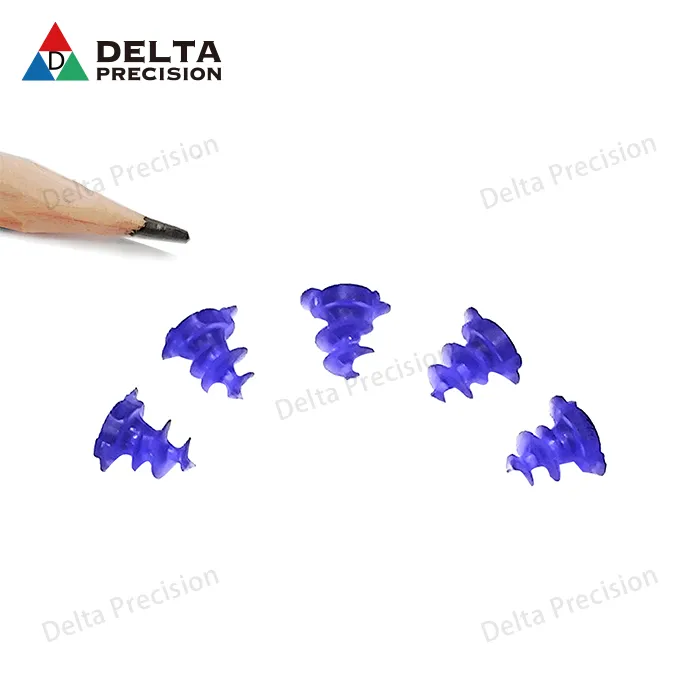
As a Micro Injection Molding supplier, we understand the importance of meeting these standards. We have state - of - the - art equipment and a team of experts who are constantly monitoring and adjusting the molding process to ensure that the optical properties of our parts meet the requirements. Whether you're looking for Small Part Injection Molding or Micro Injection Molding, we've got you covered.
We also know that every project is unique, and sometimes the standard measurement methods might need to be adjusted. That's why we work closely with our customers to understand their specific needs and develop customized solutions. For example, if a customer needs a part with a specific combination of light transmittance and haze for a new and innovative application, we'll conduct in - depth research and testing to achieve the desired results.
In addition to the technical aspects, we also pay great attention to quality control. We have a strict quality management system in place to ensure that every part we produce meets the optical standards. This includes regular calibration of our measuring equipment, in - process inspections, and final product testing.
If you're in the market for high - quality micro injection molded parts with excellent optical properties, don't hesitate to reach out. We're always ready to discuss your project, answer your questions, and provide you with a quote. Whether you're a startup working on a revolutionary new product or an established company looking to improve your existing designs, we have the expertise and experience to help you succeed.
In conclusion, measuring the optical properties of micro injection molded parts is a complex but essential process. By adhering to industry standards and using advanced measurement techniques, we can ensure that our parts meet the highest quality requirements. So, if you're interested in working with a reliable Micro Injection Molding supplier, give us a call and let's start creating something great together.
References

- ASTM D1003 - Standard Test Method for Haze and Luminous Transmittance of Transparent Plastics
- Various textbooks on optical properties of plastics and injection molding processes