

Hey there! As a supplier of Valve Turned Parts, I'm super excited to take you through the manufacturing process of these nifty little components. So, let's dive right in!
Understanding Valve Turned Parts
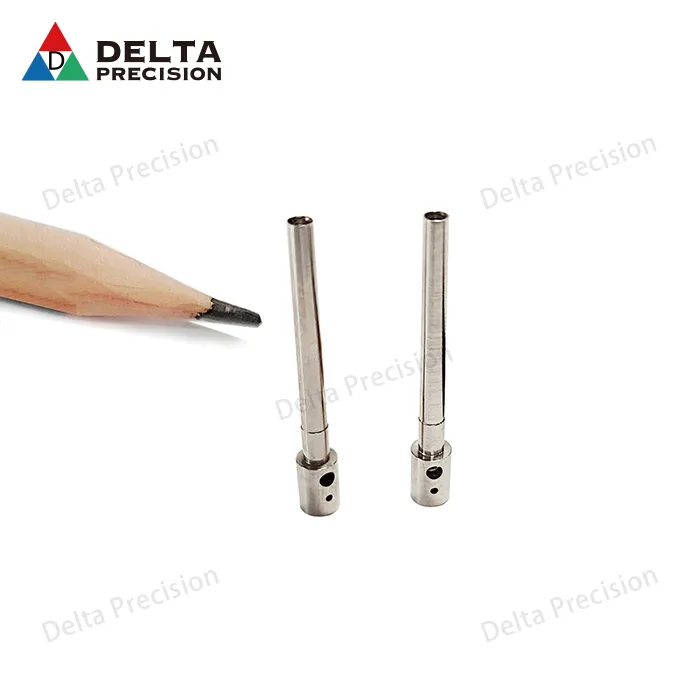
First off, what are Valve Turned Parts? Well, they're crucial components used in all sorts of valves. These parts are precision - made to fit perfectly into valves, ensuring smooth operation and proper functionality. You can check out more about them on our website Valve Turned Parts.
The Raw Material Selection
The manufacturing process kicks off with choosing the right raw materials. The material selection depends on the specific application of the valve. For instance, if the valve is going to be used in a high - pressure environment, we might opt for stainless steel. It's strong, corrosion - resistant, and can handle a lot of stress. On the other hand, if the valve is for a less demanding application, brass could be a good choice as it's relatively easy to machine and cost - effective.
We source our raw materials from trusted suppliers. We make sure that the materials meet our strict quality standards. This is super important because the quality of the raw material directly impacts the quality of the final product.
Cutting the Raw Material
Once we've got the right raw material, it's time to cut it into the appropriate size. We use different cutting methods depending on the material and the size of the part we need to make. For metals like steel and brass, we often use saws or lasers.
Saws are great for making straight cuts. They're relatively inexpensive and can handle a wide range of material thicknesses. Laser cutting, on the other hand, is more precise. It can create very detailed shapes and is especially useful for making small, intricate Valve Turned Parts.
Turning Operations
Now, the turning process is where the magic really happens. Turning is a machining process in which a cutting tool, typically a single - point cutting tool, removes material from the outer diameter of a rotating workpiece. We use lathes for this operation.
There are different types of lathes, but the most common ones we use are CNC (Computer Numerical Control) lathes. These lathes are controlled by a computer, which means we can program them to make very precise cuts. We input the dimensions and specifications of the Valve Turned Part into the computer, and the lathe does the rest.
During the turning process, the workpiece rotates at high speed while the cutting tool moves along the length of the workpiece, removing material to create the desired shape. This process can create cylindrical shapes, threads, and other features that are essential for Valve Turned Parts.
Drilling and Boring
After the turning process, we often need to drill holes in the Valve Turned Parts. Drilling is a process of creating holes in a workpiece using a drill bit. We use different types of drill bits depending on the size and depth of the hole we need to make.
Boring is another important operation. It's used to enlarge an existing hole or to improve its accuracy. We use boring bars for this operation. Boring is especially important for creating the internal passages in Valve Body and other valve components.
Milling
Milling is a machining process that uses a rotating cutter to remove material from the workpiece. We use milling machines to create flat surfaces, slots, and other complex shapes on the Valve Turned Parts.
There are different types of milling operations, such as face milling, peripheral milling, and end milling. We choose the appropriate milling operation based on the design requirements of the part. Milling is a very versatile process and can be used to create a wide range of features on Valve Turned Parts.
Surface Finishing
Once the machining operations are complete, the Valve Turned Parts go through a surface finishing process. Surface finishing is important for several reasons. First, it improves the appearance of the part. Second, it can enhance the corrosion resistance of the part. And third, it can reduce friction, which is important for the smooth operation of the valve.
We use different surface finishing techniques, such as grinding, polishing, and plating. Grinding is used to remove any rough edges or irregularities on the surface of the part. Polishing gives the part a smooth, shiny finish. Plating, such as chrome plating or nickel plating, can provide a protective layer on the surface of the part, making it more resistant to corrosion.

Quality Control
Quality control is an integral part of the manufacturing process. We have a strict quality control system in place to ensure that every Valve Turned Part meets our high - quality standards.
We use different inspection methods, such as visual inspection, dimensional inspection, and material testing. Visual inspection is used to check for any obvious defects, such as cracks or scratches. Dimensional inspection is done using measuring tools like calipers, micrometers, and coordinate measuring machines (CMMs) to make sure that the part meets the specified dimensions. Material testing is used to verify the composition and properties of the material.
Assembly and Packaging
After the parts pass the quality control checks, they're ready for assembly. We assemble the Valve Turned Parts into the final valve components. This requires careful alignment and fitting of the parts to ensure proper functionality.
Once the assembly is complete, the valve components are packaged. We use high - quality packaging materials to protect the parts during transportation. The packaging is also labeled with important information, such as the part number, specifications, and our company details.
Why Choose Our Valve Turned Parts
We're really proud of the Valve Turned Parts we produce. We've got a team of experienced engineers and technicians who are dedicated to making high - quality parts. Our manufacturing process is optimized to ensure efficiency and precision.
If you're in the market for Valve Machining Components, we'd love to have a chat with you. Whether you need a small batch for a prototype or a large - scale production run, we can meet your needs. Just reach out to us, and we'll be happy to discuss your requirements and provide you with a quote.
References
- Manufacturing Engineering Handbook, Second Edition.
- Machining Processes and Machine Tools, Third Edition.
- Fundamentals of Modern Manufacturing: Materials, Processes, and Systems, Fourth Edition.