

In the dynamic world of manufacturing, the demand for components with intricate and complex shapes has been on a steady rise. As a provider of CNC precision machining services, I often encounter inquiries about whether our technology can meet the challenge of crafting these complex designs. In this blog post, I will explore the capabilities of CNC precision machining in producing complex shapes and shed light on the technical aspects that make it a powerful solution for manufacturers across various industries.
Understanding CNC Precision Machining
CNC, or Computer Numerical Control, precision machining is a manufacturing process that uses computerized controls and machine tools to remove material from a workpiece. This process is highly automated, allowing for precise control over the cutting tools' movement and operation. Unlike traditional manual machining, CNC precision machining can execute complex machining tasks with a high degree of accuracy and repeatability.
One of the key advantages of CNC precision machining is its flexibility. With the ability to program the machine's movements using CAD (Computer-Aided Design) and CAM (Computer-Aided Manufacturing) software, manufacturers can create parts with almost any imaginable shape. This flexibility is particularly valuable when dealing with complex geometries that would be difficult or impossible to produce using conventional machining methods.
The Technology Behind Complex Shape Machining
At the heart of CNC precision machining's ability to produce complex shapes is its multi-axis machining capabilities. Traditional machining methods are typically limited to three axes of movement (X, Y, and Z), which restricts the complexity of the shapes that can be produced. In contrast, modern CNC machines can have up to five or even more axes of motion, allowing for greater freedom in shaping the workpiece.
For example, a 5-axis CNC machine can rotate the workpiece in multiple directions while the cutting tool moves along the X, Y, and Z axes. This enables the machine to access all sides of the workpiece without having to reposition it manually, reducing setup time and improving accuracy. With 5-axis machining, it is possible to create complex shapes such as turbine blades, aerospace components, and medical implants that require precise contours and angles.
Another important technology in CNC precision machining is advanced tooling. The use of specialized cutting tools, such as end mills, ball nose cutters, and drills, allows for more precise and efficient machining of complex shapes. These tools are designed to handle a variety of materials, including metals, plastics, and composites, and can be customized to meet specific machining requirements.
Real-World Applications of Complex Shape Machining
The ability to produce complex shapes using CNC precision machining has opened up new possibilities in various industries. In the aerospace industry, for example, CNC machining is used to manufacture components such as engine parts, wing structures, and landing gear. These components often have complex geometries and require high levels of precision to ensure optimal performance and safety.
In the medical field, CNC machining is used to create custom implants and surgical instruments. The ability to produce parts with complex shapes and precise dimensions is essential for ensuring a perfect fit and minimizing the risk of complications during surgery. For example, dental implants can be machined to match the patient's unique jawbone structure, while orthopedic implants can be designed to mimic the natural shape and function of the human body.
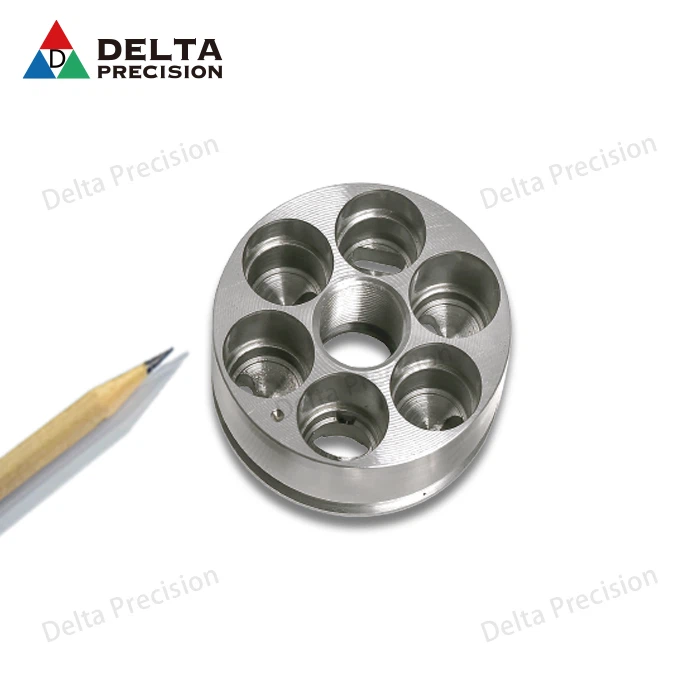

The automotive industry also benefits from CNC precision machining's ability to produce complex shapes. From engine blocks and transmission components to custom body panels and interior parts, CNC machining allows for the mass production of high-quality, precision-engineered parts. This not only improves the performance and reliability of vehicles but also reduces manufacturing costs and lead times.
Our CNC Precision Machining Services
As a CNC precision machining supplier, we offer a wide range of services to meet the diverse needs of our customers. Our state-of-the-art facilities are equipped with the latest CNC machines, including 5-axis machining centers, CNC Turning lathes, and Multi-spindle Machining systems. These machines are capable of producing parts with tight tolerances and complex geometries, ensuring the highest level of quality and accuracy.
In addition to our machining capabilities, we also offer CNC Prototyping Machining services, allowing our customers to test and validate their designs before mass production. Our experienced team of engineers and technicians can work closely with you to develop a custom machining solution that meets your specific requirements. Whether you need a single prototype or a large production run, we have the expertise and resources to deliver high-quality parts on time and within budget.
Contact Us for Your Machining Needs
If you are looking for a reliable CNC precision machining supplier that can produce complex shapes with the highest level of quality and accuracy, look no further. Our team of experts is ready to assist you with your next project. Whether you have a specific design in mind or need help developing a new concept, we can provide the guidance and support you need to bring your ideas to life.
To learn more about our CNC precision machining services or to request a quote, please contact us today. We look forward to the opportunity to work with you and help you achieve your manufacturing goals.
References
- Groover, M. P. (2016). Fundamentals of Modern Manufacturing: Materials, Processes, and Systems. Wiley.
- Dornfeld, D. A., Min, S., & Takeuchi, Y. (2007). Handbook of machining with grinding wheels. CRC Press.
- Stephenson, D. A., & Agapiou, J. S. (2006). Metal cutting theory and practice. CRC Press.