

Hey there! As a valve body supplier, I've had my fair share of experiences and knowledge about how these little components play a huge role in a braking system. So, let's dive right in and talk about how a valve body regulates the pressure in a braking system.
First off, let's understand the basics of a braking system. When you press the brake pedal in your car, you're initiating a chain reaction. The pedal force is transferred to the master cylinder, which then pressurizes the brake fluid. This pressurized fluid is sent through a network of brake lines to the brake calipers or wheel cylinders at each wheel. Now, this is where the valve body steps in.
The valve body is like the traffic cop of the braking system. It controls the flow and pressure of the brake fluid to ensure that each wheel gets the right amount of braking force. There are different types of valve bodies used in braking systems, but they all have the same basic function: to regulate pressure.
One of the key components in a valve body is the solenoid valve. Solenoid valves are electromechanical devices that can open or close a valve based on an electrical signal. In a braking system, solenoid valves are used to control the flow of brake fluid. When the brake pedal is pressed, the electronic control unit (ECU) sends a signal to the solenoid valves in the valve body. These valves then open or close to regulate the pressure of the brake fluid going to each wheel.
For example, in an anti - lock braking system (ABS), the valve body plays a crucial role. When the ECU detects that a wheel is about to lock up during braking, it sends a signal to the solenoid valves in the valve body. The valves will then rapidly open and close to reduce the pressure of the brake fluid going to the wheel that is about to lock up. This prevents the wheel from skidding and allows the driver to maintain steering control.
Another important aspect of the valve body's pressure regulation is the pressure relief valve. Pressure relief valves are designed to open when the pressure in the braking system exceeds a certain limit. This is a safety feature that prevents damage to the braking components due to over - pressure. If the pressure in the system gets too high, the pressure relief valve will open, allowing some of the brake fluid to flow back into the reservoir, thus reducing the pressure.
Now, let's talk about how the valve body is made. At our company, we offer a wide range of Valve Machining Components that are used in the production of valve bodies. These components are precision - machined to ensure high - quality and reliable performance. The Valve Body itself is usually made from high - strength materials such as aluminum or steel. These materials can withstand the high pressures and forces in the braking system.
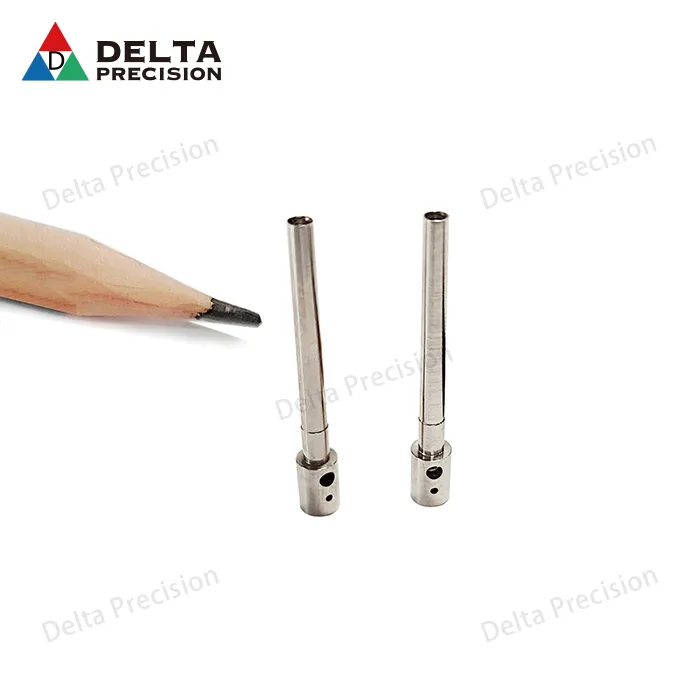
We also have Valve Turned Parts that are an essential part of the valve body. These turned parts are carefully crafted to fit perfectly within the valve body, ensuring smooth operation and accurate pressure regulation.
The design of the valve body is also crucial for effective pressure regulation. The internal passages and chambers in the valve body are carefully engineered to control the flow of brake fluid. The size and shape of these passages determine how the pressure is distributed and regulated. A well - designed valve body will ensure that the braking force is evenly distributed among all the wheels, providing a smooth and safe braking experience.
In modern braking systems, the valve body is often integrated with other components such as the master cylinder and the electronic control unit. This integration allows for more precise control of the braking system. The ECU can monitor various parameters such as wheel speed, vehicle speed, and brake pedal position, and then adjust the pressure in the valve body accordingly.
When it comes to the manufacturing process of valve bodies, precision is key. Even a small deviation in the dimensions of the valve body or its components can affect the pressure regulation in the braking system. That's why we use state - of - the - art machining and manufacturing techniques to ensure the highest level of precision.
We also perform rigorous testing on our valve bodies before they are shipped to our customers. These tests include pressure testing, flow testing, and leak testing. We want to make sure that every valve body we supply meets the highest standards of quality and performance.
If you're in the market for high - quality valve bodies or related components for your braking system, we'd love to have a chat with you. Our team of experts has years of experience in the industry and can provide you with the best solutions for your needs. Whether you're a car manufacturer, a braking system supplier, or someone looking to upgrade your vehicle's braking system, we can offer you top - notch products.
So, if you're interested in learning more about our Valve Body, Valve Machining Components, or Valve Turned Parts, don't hesitate to reach out. We're here to help you get the most out of your braking system.

References:
- Automotive Braking Systems Handbook
- Modern Hydraulic and Pneumatic Systems Textbook