

In the world of manufacturing, CNC turning is a pivotal process that has revolutionized the production of precision parts. As a trusted CNC Turning supplier, I've witnessed firsthand the critical role that finishing cutting strategies play in achieving high - quality products. In this blog, I'll delve into the key cutting strategies for finishing in CNC turning, sharing insights and best practices based on my years of experience in the industry.
Understanding the Basics of CNC Turning Finishing
Finishing in CNC turning is the final step in the machining process, aimed at achieving the desired surface finish, dimensional accuracy, and geometric tolerance of the workpiece. Unlike roughing, which focuses on removing large amounts of material quickly, finishing requires a more delicate approach to ensure the part meets the exact specifications.
One of the primary goals of finishing is to minimize surface roughness. A smooth surface finish not only enhances the aesthetic appeal of the part but also improves its functionality. For example, in applications where parts need to slide or rotate against each other, a low - roughness surface reduces friction and wear, increasing the lifespan of the components.
Key Cutting Strategies for Finishing
1. Tool Selection
The choice of cutting tool is crucial for achieving a high - quality finish in CNC turning. Carbide inserts are a popular choice due to their hardness, wear resistance, and ability to maintain a sharp cutting edge. For finishing operations, inserts with a small nose radius are often preferred as they can produce a smoother surface finish.
Coated tools can also offer significant advantages. Titanium nitride (TiN) coatings, for instance, reduce friction between the tool and the workpiece, resulting in lower cutting forces and improved chip evacuation. This, in turn, helps to prevent built - up edge formation, which can negatively impact the surface finish.
When selecting a tool, it's also important to consider the material being machined. Different materials have different properties, such as hardness, ductility, and thermal conductivity, which can affect the cutting process. For example, machining stainless steel requires a tool with good heat resistance, while machining aluminum benefits from a tool that can handle the soft and sticky nature of the material.
2. Cutting Parameters
Cutting parameters, including cutting speed, feed rate, and depth of cut, have a direct impact on the surface finish and dimensional accuracy of the part.
- Cutting Speed: The cutting speed refers to the speed at which the cutting edge of the tool moves relative to the workpiece. In finishing operations, a higher cutting speed is generally preferred as it can reduce the cutting forces and improve the surface finish. However, the cutting speed must be carefully selected based on the tool material, workpiece material, and tool geometry to avoid excessive tool wear or damage.
- Feed Rate: The feed rate is the distance the tool advances along the workpiece per revolution. A lower feed rate is typically used for finishing to achieve a smoother surface finish. However, too low a feed rate can increase the machining time and may cause the tool to rub against the workpiece, resulting in a poor surface finish.
- Depth of Cut: The depth of cut is the thickness of the material removed in each pass. In finishing, a small depth of cut is used to remove only a thin layer of material, ensuring dimensional accuracy and a smooth surface finish.
3. Chip Control
Proper chip control is essential for achieving a high - quality finish in CNC turning. Long, continuous chips can cause problems such as tool damage, poor surface finish, and machine downtime. To control chips, various techniques can be employed.
One common method is to use chip breakers on the cutting tool. Chip breakers are designed to break the chips into small, manageable pieces, preventing them from tangling around the tool or workpiece. Another approach is to adjust the cutting parameters, such as the feed rate and depth of cut, to promote chip breaking.
Coolant also plays an important role in chip control. A well - applied coolant can reduce the temperature at the cutting zone, improve chip evacuation, and prevent built - up edge formation. Water - soluble coolants are commonly used in CNC turning as they offer good cooling and lubrication properties.
4. Tool Path Planning
The tool path is the route that the cutting tool follows during the machining process. In finishing, a smooth and continuous tool path is essential to achieve a uniform surface finish.

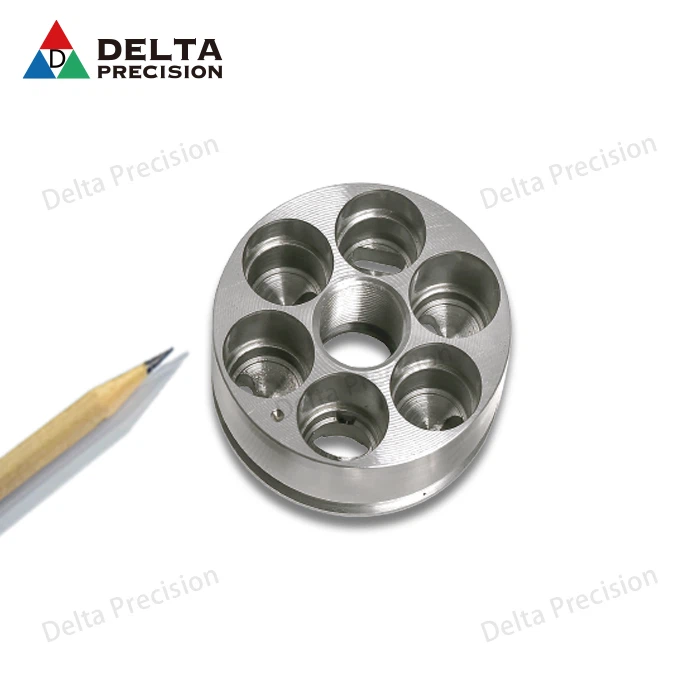
One approach to tool path planning is to use a constant - scallop height strategy. This strategy ensures that the scallop height, which is the height of the ridges left on the workpiece surface after each pass, remains constant across the entire surface. By maintaining a constant scallop height, a more consistent surface finish can be achieved.
Another important consideration in tool path planning is to avoid sudden changes in direction or speed. Sudden changes can cause vibrations, which can negatively impact the surface finish and dimensional accuracy of the part. Therefore, it's important to design the tool path to be as smooth and continuous as possible.
Advanced Cutting Strategies
1. High - Speed Machining (HSM)
High - speed machining is an advanced cutting strategy that involves using high cutting speeds and feeds to reduce machining time and improve surface finish. In HSM, the cutting tool removes material at a much faster rate than traditional machining methods, resulting in shorter cycle times and higher productivity.
However, HSM requires specialized equipment and cutting tools that can withstand the high cutting forces and temperatures generated during the process. Additionally, careful planning and optimization of the cutting parameters are necessary to ensure the quality of the finished part.
2. Multi - spindle Machining
Multi - spindle Machining is another advanced technique that can significantly improve the efficiency and quality of CNC turning. In multi - spindle machining, multiple cutting tools are used simultaneously to machine different features of the workpiece. This allows for parallel processing, reducing the overall machining time.
Multi - spindle machining is particularly suitable for high - volume production as it can produce parts with high precision and consistency. However, it requires a more complex machine setup and programming, and the initial investment in equipment can be significant.
3. CNC Prototyping Machining
CNC Prototyping Machining is a valuable tool for testing and validating new designs before mass production. In CNC prototyping, the same cutting strategies used in production can be applied to create functional prototypes with high accuracy and surface finish.
Prototyping allows designers to identify and correct any design flaws early in the development process, reducing the risk of costly rework and delays in production. It also enables manufacturers to evaluate the performance of the part under real - world conditions, ensuring that it meets the required specifications.
Conclusion
As a CNC Turning supplier, I understand the importance of implementing effective cutting strategies for finishing in CNC turning. By carefully selecting the cutting tool, optimizing the cutting parameters, controlling the chips, and planning the tool path, manufacturers can achieve high - quality parts with excellent surface finish and dimensional accuracy.
Advanced cutting strategies such as high - speed machining, multi - spindle machining, and CNC prototyping machining offer additional opportunities to improve efficiency and quality. However, these techniques require a deeper understanding of the machining process and the use of specialized equipment.
If you're in the market for high - quality CNC turned parts or need advice on cutting strategies for finishing, I encourage you to reach out for a procurement discussion. Our team of experts is ready to assist you in finding the best solutions for your specific needs.
References
- Boothroyd, G., & Knight, W. A. (2006). Fundamentals of machining and machine tools. CRC Press.
- Kalpakjian, S., & Schmid, S. R. (2013). Manufacturing engineering and technology. Pearson.
- Trent, E. M., & Wright, P. K. (2000). Metal cutting. Butterworth - Heinemann.