

Hey there! As a supplier of Miniature Check Valves, I often get asked about the flow capacity of these little wonders at different pressures. So, I thought I'd take a deep dive into this topic and share some insights with you.
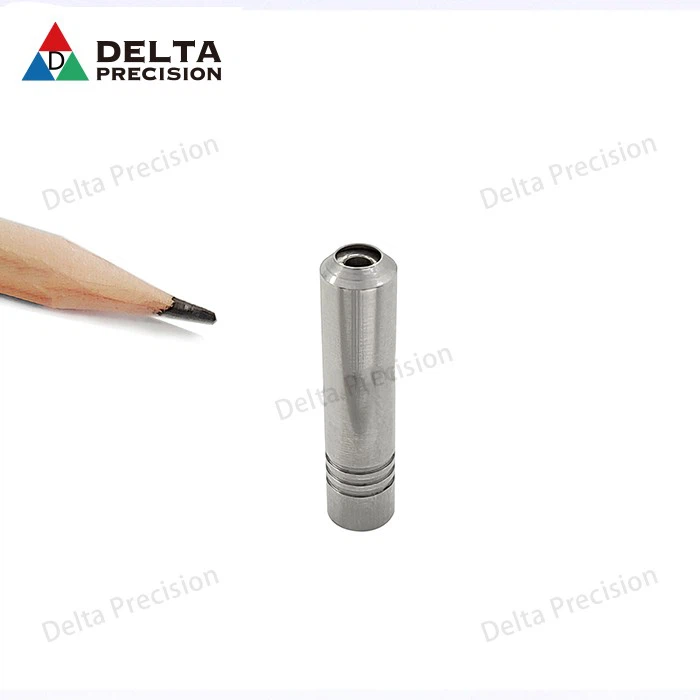

First off, let's quickly go over what a Miniature Check Valve is. A Miniature Check Valve, also known as a Miniature One-way Valve, is a small but crucial component in many hydraulic and pneumatic systems. It allows fluid or gas to flow in one direction only, preventing backflow and ensuring the proper functioning of the system. These valves are used in a wide range of applications, from aerospace and marine industries to medical devices and automotive systems.
Now, let's talk about flow capacity. Flow capacity refers to the amount of fluid or gas that can pass through a valve in a given period of time. It's usually measured in units like liters per minute (L/min) or cubic feet per minute (CFM). The flow capacity of a Miniature Check Valve is influenced by several factors, and pressure is one of the most significant ones.
At low pressures, the flow capacity of a Miniature Check Valve is relatively limited. This is because the force exerted by the fluid or gas on the valve's disc or ball (the part that opens and closes to allow or block flow) is not strong enough to fully open the valve. As a result, only a small amount of fluid or gas can pass through. For example, in a system with a very low pressure of around 1-5 psi (pounds per square inch), the valve might only allow a few milliliters of fluid to flow per minute.
As the pressure increases, the force on the valve's disc or ball also increases. This causes the valve to open wider, allowing more fluid or gas to pass through. In the mid-pressure range, say around 10-50 psi, the flow capacity of the Miniature Check Valve starts to increase significantly. The valve can now handle a much larger volume of fluid or gas, and the flow rate can go up to several liters per minute, depending on the valve's size and design.
However, there's a limit to how much the flow capacity can increase with pressure. At high pressures, usually above 50 psi or more, the valve may reach its maximum flow capacity. This is because the valve's internal design and the size of its opening can only allow a certain amount of fluid or gas to pass through, no matter how much the pressure increases. In some cases, extremely high pressures can even cause problems for the valve, such as damage to the sealing surfaces or excessive wear on the moving parts.
Another important factor to consider is the viscosity of the fluid. Viscosity is a measure of a fluid's resistance to flow. For example, honey has a high viscosity, while water has a low viscosity. A Miniature Check Valve will have a lower flow capacity for a high-viscosity fluid compared to a low-viscosity fluid at the same pressure. This is because the thick, sticky nature of high-viscosity fluids makes it harder for them to pass through the valve.
The size and design of the Miniature Check Valve also play a crucial role in determining its flow capacity. Valves with larger openings and more streamlined internal designs generally have higher flow capacities. For instance, a valve with a larger diameter opening will allow more fluid or gas to pass through compared to a valve with a smaller opening, all other factors being equal.
Now, if you're in the market for Miniature Check Valves, you might be wondering how to choose the right one for your application. Well, the first step is to determine the pressure range and flow requirements of your system. If you have a low-pressure system with relatively low flow requirements, a smaller and more basic Miniature Check Valve might be sufficient. On the other hand, if you have a high-pressure system with high flow requirements, you'll need a valve that's designed to handle those conditions.
You can also look into Miniature Flow Control options. These can be used in conjunction with Miniature Check Valves to fine-tune the flow rate in your system. For example, a flow control valve can be used to adjust the amount of fluid or gas that enters the check valve, which can help optimize the overall performance of the system.
As a supplier of Miniature Check Valves, I've seen firsthand how important it is to choose the right valve for the job. That's why we offer a wide range of Miniature Check Valves with different sizes, designs, and flow capacities to meet the diverse needs of our customers. Whether you're working on a small-scale project or a large industrial application, we can help you find the perfect valve for your system.
If you're interested in learning more about our Miniature Check Valves or have any questions about flow capacity and pressure, don't hesitate to reach out. We're here to provide you with all the information you need and help you make the best decision for your project. Whether you're a DIY enthusiast or a professional engineer, we're happy to assist you. So, get in touch with us today and let's start a conversation about how our Miniature Check Valves can improve your system's performance.
References
- Fluid Mechanics textbooks
- Industry standards and guidelines for Miniature Check Valves