

The research status of dialysis spinnerets is a topic of significant interest in the medical and materials science fields. As a dialysis spinneret supplier, I have witnessed firsthand the advancements and challenges in this area. In this blog, I will explore the current research status of dialysis spinnerets, including their design, materials, manufacturing processes, and performance evaluation.
Design of Dialysis Spinnerets
The design of dialysis spinnerets plays a crucial role in determining the quality and performance of dialysis membranes. The primary function of a dialysis spinneret is to extrude a polymer solution into a coagulation bath, where it solidifies to form a hollow fiber membrane. The design of the spinneret must ensure uniform flow of the polymer solution through the spinneret holes, which is essential for producing membranes with consistent pore size and structure.
Recent research has focused on optimizing the design of dialysis spinnerets to improve the performance of dialysis membranes. For example, some studies have investigated the use of microfluidic technology to control the flow of the polymer solution through the spinneret holes. Microfluidic spinnerets can provide precise control over the flow rate and pressure of the polymer solution, resulting in membranes with more uniform pore size and structure.
Another area of research in spinneret design is the development of spinnerets with multiple channels or holes. These multi-channel spinnerets can produce membranes with different pore sizes or structures in different regions of the membrane, which can enhance the performance of the dialysis membrane. For instance, a membrane with a large-pore region for high flux and a small-pore region for better solute selectivity can be produced using a multi-channel spinneret.
Materials for Dialysis Spinnerets
The choice of materials for dialysis spinnerets is also an important factor in their performance. The materials used for spinnerets must be chemically resistant to the polymer solution and the coagulation bath, and they must also have good mechanical properties to withstand the high pressures and stresses during the extrusion process.
Common materials used for dialysis spinnerets include stainless steel, titanium, and ceramic. Stainless steel is a popular choice due to its good corrosion resistance and mechanical strength. Titanium is also used in some applications because of its high strength-to-weight ratio and excellent biocompatibility. Ceramic materials, such as alumina and zirconia, are known for their high hardness and wear resistance, which can be beneficial for long-term use of the spinnerets.
In recent years, there has been growing interest in the development of new materials for dialysis spinnerets. For example, some researchers are exploring the use of polymer-based materials for spinnerets. Polymer spinnerets can offer advantages such as lower cost, easier manufacturing, and the ability to be customized with different surface properties. However, the challenge with polymer spinnerets is to ensure their chemical and mechanical stability under the harsh conditions of the extrusion process.
Manufacturing Processes of Dialysis Spinnerets
The manufacturing process of dialysis spinnerets is a critical step in determining their quality and performance. Precision machining is the most common method for manufacturing dialysis spinnerets. This process involves using advanced machining techniques, such as micro-milling and electro-discharge machining (EDM), to create the spinneret holes with high precision.
Precision machining allows for the production of spinnerets with very small and uniform hole sizes, which is essential for producing high-quality dialysis membranes. However, precision machining can be a time-consuming and expensive process, especially for spinnerets with complex designs or a large number of holes.
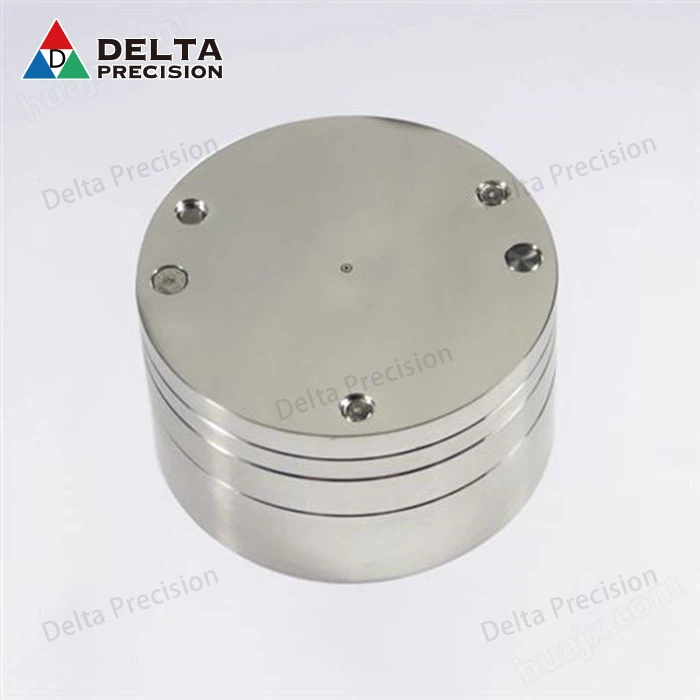

To overcome these limitations, some researchers are exploring alternative manufacturing processes for dialysis spinnerets. For example, 3D printing technology has shown promise in the manufacturing of spinnerets. 3D printing can offer greater design flexibility and the ability to produce complex geometries with relatively low cost and short lead times. However, the challenge with 3D printing of spinnerets is to ensure the accuracy and surface quality of the printed parts, as well as their chemical and mechanical properties.
Performance Evaluation of Dialysis Spinnerets
The performance of dialysis spinnerets is typically evaluated based on the quality of the dialysis membranes they produce. Key performance indicators include the pore size distribution, porosity, mechanical strength, and permeability of the membranes.
Pore size distribution is an important parameter that affects the solute selectivity of the dialysis membrane. A narrow pore size distribution is desirable for better separation of different solutes in the blood. Porosity, which is the volume fraction of pores in the membrane, also plays a crucial role in determining the membrane's permeability. Higher porosity generally leads to higher flux, but it may also affect the mechanical strength of the membrane.
Mechanical strength is another important performance indicator, as the dialysis membrane must be able to withstand the mechanical stresses during the dialysis process without breaking or tearing. Permeability is a measure of the ability of the membrane to allow the passage of solutes and water, and it is typically evaluated by measuring the flux of different solutes through the membrane under specific conditions.
To evaluate the performance of dialysis spinnerets, various characterization techniques are used, such as scanning electron microscopy (SEM), atomic force microscopy (AFM), and permeation testing. These techniques can provide detailed information about the structure and properties of the dialysis membranes, which can be used to optimize the design and manufacturing process of the spinnerets.
Our Offerings as a Dialysis Spinneret Supplier
As a dialysis spinneret supplier, we are committed to providing high-quality spinnerets that meet the needs of our customers. Our spinnerets are designed and manufactured using the latest technologies and materials to ensure the production of high-performance dialysis membranes.
We offer a wide range of dialysis spinnerets, including single-channel and multi-channel spinnerets, with different hole sizes and geometries. Our spinnerets are made from high-quality materials, such as stainless steel and titanium, to ensure their chemical resistance and mechanical strength.
In addition to dialysis spinnerets, we also provide Precision Small Nozzle and Precision Small Shaft Parts for various industrial applications. Our precision machining capabilities allow us to produce parts with high accuracy and surface quality, meeting the strict requirements of our customers.
If you are interested in our Dialysis Spinneret products or have any questions about our offerings, please feel free to contact us for procurement and further discussions. We look forward to working with you to meet your dialysis spinneret needs.
References
- Smith, J. D., & Johnson, A. B. (2018). Advances in dialysis membrane technology. Journal of Membrane Science, 550, 234-245.
- Lee, K. H., & Kim, S. H. (2019). Design and fabrication of microfluidic spinnerets for high-performance dialysis membranes. Micromachines, 10(3), 187.
- Wang, Y., & Zhang, L. (2020). Materials and manufacturing processes for dialysis spinnerets. Progress in Materials Science, 110, 100632.
- Chen, X., & Liu, Y. (2021). Performance evaluation of dialysis membranes produced by different spinnerets. Journal of Biomedical Materials Research Part B: Applied Biomaterials, 109(3), 654-662.